
Last updated October 31, 2026
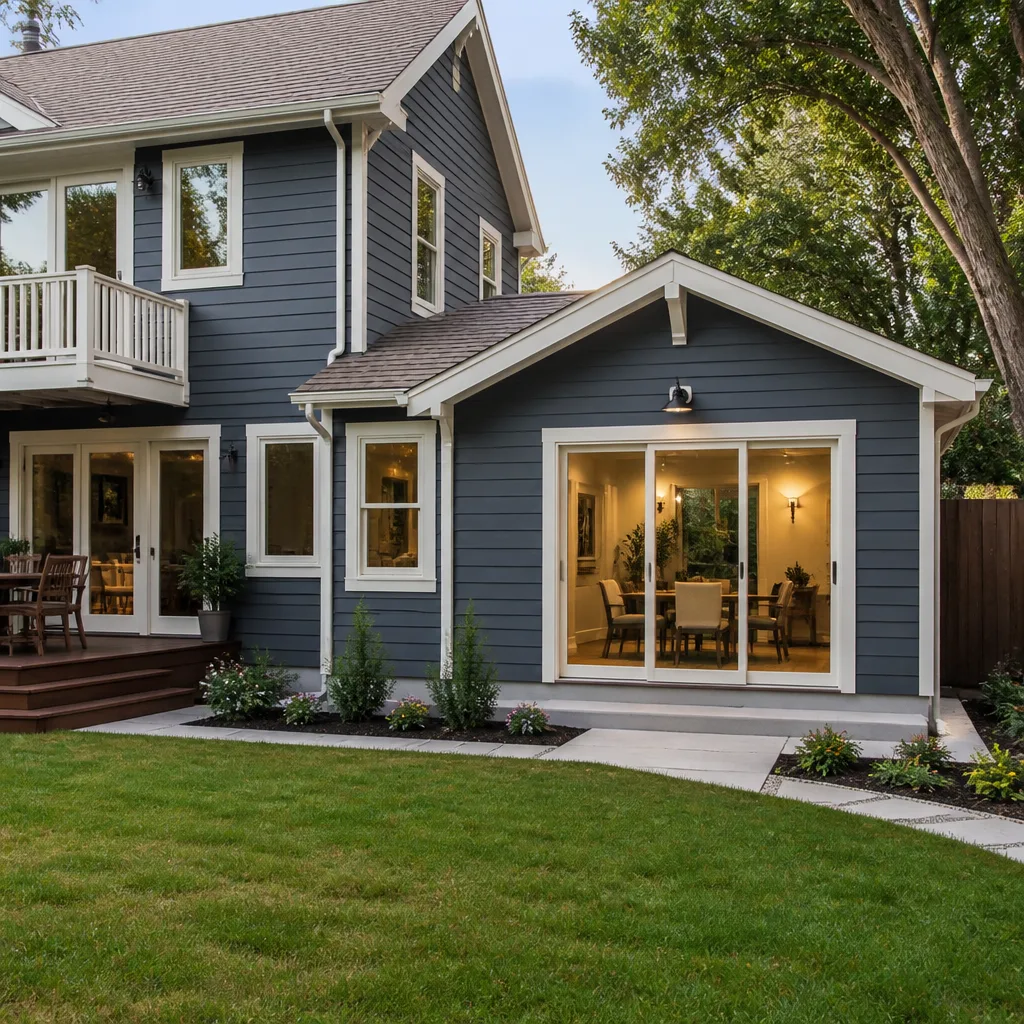 Home additions & ADU
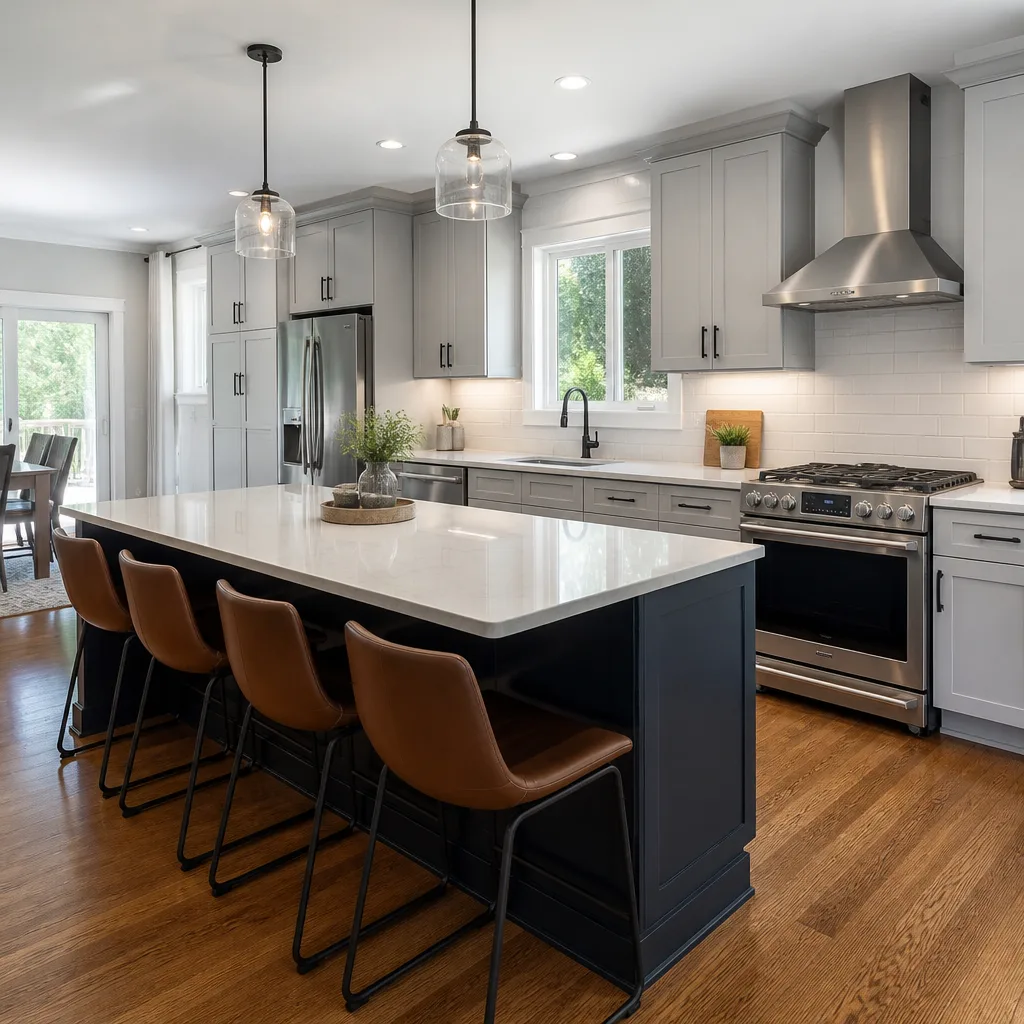 Kitchen remodeling
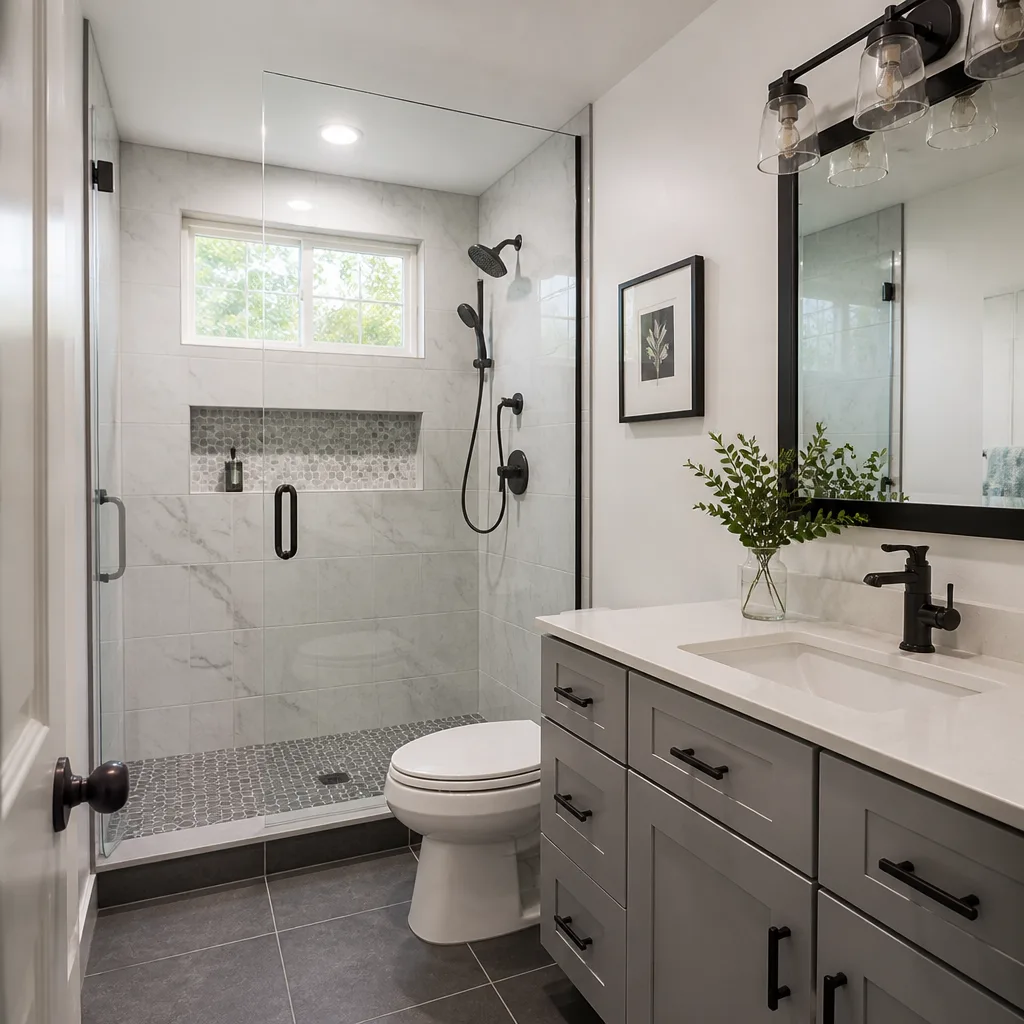 Bathroom remodeling
 Roofing
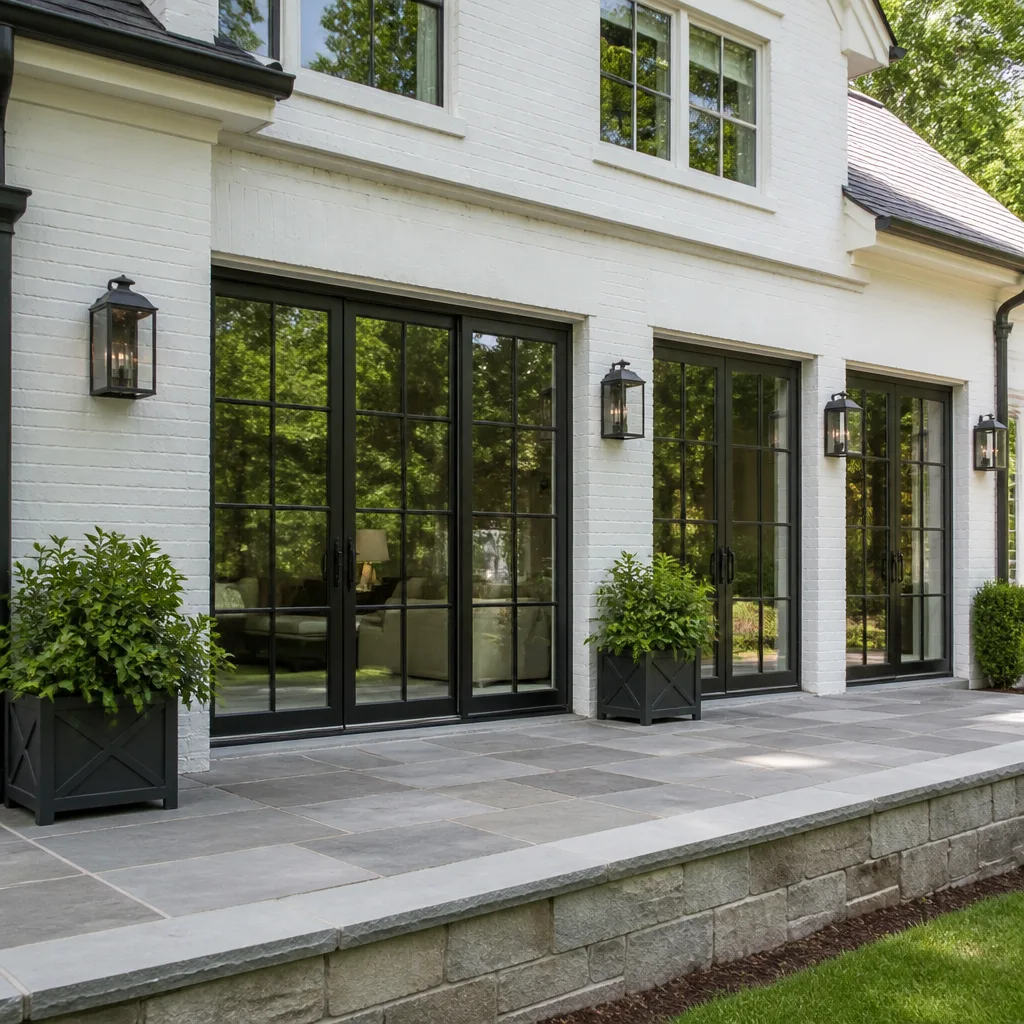 Windows & doors
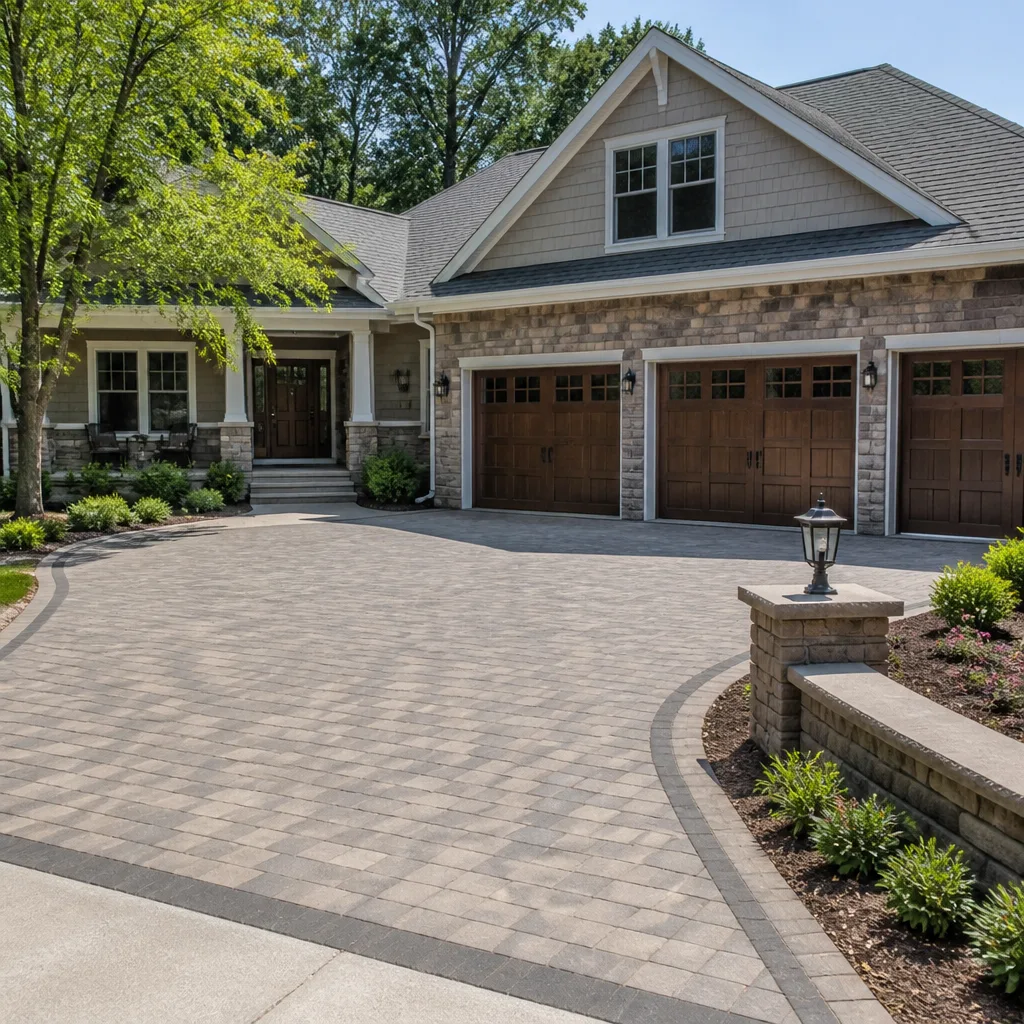 Driveway & pavers
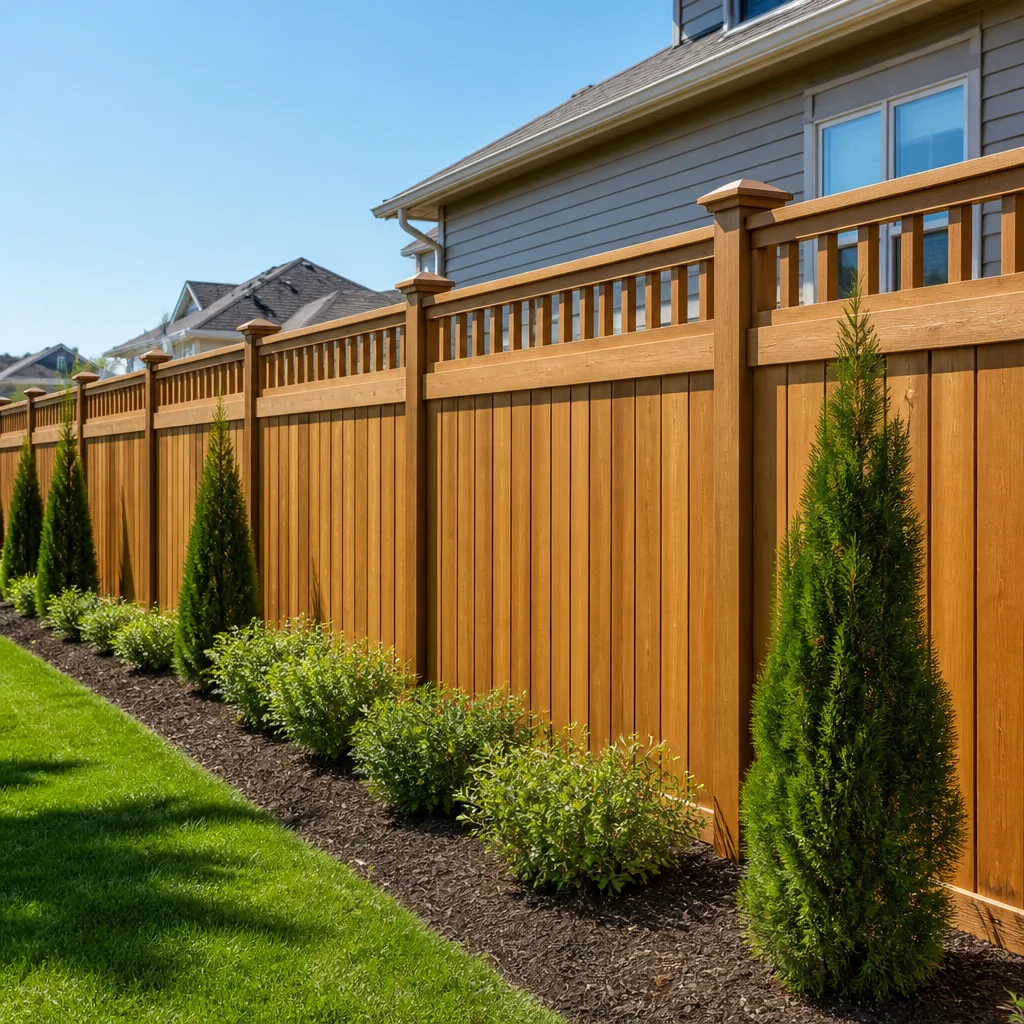 Fence
Free written scope consultation - allowances, timeline, and change-order rules on paper before a single trade is scheduled
DIY vs Professional Construction: The San Bernardino Homeowner’s Decision Guide
California is one of only a handful of states where certain DIY work, even done perfectly, can trigger a mechanics lien on your property if an unlicensed helper is paid to assist you. That’s a fact most homeowners in San Bernardino don’t learn until a sale falls through or an insurance claim gets denied. This guide walks through the decision project by project: what California law actually permits you to do on your own home, what requires a licensed contractor regardless of your skill level, and where the Inland Empire climate punishes work that isn’t done to professional tolerances. For How to Hire a Construction Contractor in San Bernardino: A Step-by-Step Guide, see our companion resource. By the end, you’ll know exactly where the line is between smart savings and expensive liability.
Styles & brands we work with
Quick Answer
The DIY vs. professional decision in San Bernardino comes down to three things: California contractor law, permit requirements, and whether the work touches systems that fail catastrophically when installed outside spec (roofs, electrical, plumbing, structural). Interior painting, demo, and cabinet hardware are safe DIY territory for most homeowners. Roofing, window replacement, electrical panel work, and anything structural should involve a licensed general contractor, both for code compliance and because San Bernardino’s high-UV, thermal-swing climate punishes marginal workmanship harder than coastal markets do.
Table of Contents
- What California Law Allows a Homeowner to DIY
- Permits in San Bernardino: The Owner-Builder Trap
- The Hidden Cost Math of DIY
- Why San Bernardino’s Climate Makes DIY Riskier
- Projects Where DIY Genuinely Saves Money
- Projects Where a Licensed Contractor Is the Only Sane Choice
- Common Mistakes to Avoid
- When to Call a Professional
- Frequently Asked Questions
- The Bottom Line
What California Law Allows a Homeowner to DIY
California Business and Professions Code Section 7048 carves out a specific exemption: a homeowner may act as their own contractor on their own primary residence, doing the work themselves or hiring licensed subcontractors directly. That exemption, however, comes with strings attached. You must honestly intend to live in the home, not flip it. You must do the work yourself or hire licensed subs. And here’s the part that catches people: if you pay an unlicensed individual more than $500 for labor, that person can legally file a mechanics lien against your property, even if the work was flawless. In San Bernardino, where labor for day-work helpers is common, this isn’t a theoretical risk. We’ve seen it happen.
The practical takeaway is that you can legally paint, tile, hang drywall, install cabinets, pour a small patio slab, or replace fixtures in your own San Bernardino home without a contractor’s license. What you cannot do without jumping through significant hoops is hire unlicensed help to do the heavy lifting. The moment cash changes hands with an unlicensed worker, you’ve created legal exposure. State law is clear on this, and it applies from Del Rosa to Verdemont to the north end of town.
Where the owner-builder exemption ends
- Work beyond your personal capacity: You’re allowed to act as your own general contractor, but not to exceed your actual ability. If the work fails inspection because of a defect you signed off on, you own that.
- Work on rental property or a second home: The exemption covers your primary residence only. A San Bernardino duplex or investment property in the foothills requires a licensed contractor for any work over $500 in combined labor and materials.
- Anything involving unlicensed paid helpers: Again: over $500 in labor paid to an unlicensed person creates lien rights for that person. This is the single most misunderstood rule in California construction law.
- Work requiring a specialty license: Roofing, HVAC, and electrical work require C-39, C-20, and C-10 licenses respectively unless you personally own the property and do the work yourself. Subcontracting this work means hiring someone who holds those classifications.
If you’re planning a larger project, a General Contractor in San Bernardino holds the B license that covers most remodel and repair scopes. That matters when you’re pulling permits as the owner-builder versus hiring someone who carries the liability.
Permits in San Bernardino: The Owner-Builder Trap
When you pull a permit in San Bernardino as an owner-builder, you sign a form acknowledging that you are responsible for the work. That signature transfers legal liability from the city to you. If you sell the house later and an inspector finds unpermitted or defective work, you’re the one who eats the correction cost. If you hire a licensed contractor, the permit is pulled under their license, and their liability insurance and bond cover the work. That distinction is the single largest hidden cost in the DIY equation, and it gets less attention than it deserves.
Owner-builder permits in San Bernardino also require you to demonstrate that you occupy the home and intend to do the work yourself. The city will ask. For projects involving structural changes, electrical, plumbing, or roofing, the permit office will expect plans that meet current California Building Code, which is not a homeowner-friendly document. Most owner-builders in San Bernardino end up hiring a draftsperson or engineer for plan work, which is a licensed expense you’ll eat before you ever swing a hammer.
- Check the scope: San Bernardino requires permits for structural, electrical, plumbing, roofing, window replacement, and any project that changes the building envelope.
- Verify your owner-occupancy status: You must live in the home and intend to remain for the immediate future. Investment properties don’t qualify for the owner-builder exemption.
- Plan for licensed subs: If you won’t do 100% of the work yourself, you’ll need licensed subcontractors for the trades you don’t handle. You become the general contractor, which means you manage scheduling, inspections, and liability.
- Sign the liability form: You’ll sign a verification stating you understand the legal and financial responsibility. That signature matters at resale time.
For anyone considering a larger remodel, our Home Remodeling in San Bernardino page covers how permitted scopes are structured so the contractor carries the risk, not the homeowner. That’s the structural difference between DIY and professional work that most guides skip.
The Hidden Cost Math of DIY
The honest math on DIY in San Bernardino rarely favors the homeowner once you factor in every line item. A $5,000 kitchen floor may look like a $5,000 savings opportunity until you price out the actual costs of doing it yourself. Here’s what the numbers look like when we run them for a typical San Bernardino home.
Cost comparison table: DIY vs. licensed contractor
| Cost item | DIY (owner-builder) | Licensed contractor |
|---|---|---|
| Permit fees | $150 – $800 (paid directly, non-refundable) | Included in bid, usually itemized |
| Tool rental & purchases | $200 – $1,200 depending on scope | $0 additional (contractor owns tools) |
| Material waste from learning curve | 10 – 25% overage on tile, flooring, drywall | 3 – 8% waste (standard, built into bid) |
| Plans & engineering (if required) | $800 – $3,000 out of pocket | Included in project scope |
| Insurance coverage for defects | $0 | Covered by contractor’s liability policy and bond |
| Your time at fair market value | 20 – 40 hours minimum for a single room | $0 (you’re not on the hook) |
When you run the table, a $5,000 retail project done DIY typically nets you about $2,000 in real savings for a straightforward job like drywall patching or painting. For anything involving the building envelope or major systems, the DIY math often comes out negative once you include the resale risk of unpermitted work. That’s before we get to San Bernardino’s specific climate penalties, which add another layer to the calculus.
One more line item most guides miss: the opportunity cost of fixing your own mistakes. In our experience on Home Renovation in San Bernardino projects, the most expensive correction call we take is the one where a homeowner spent three weekends on a job that then failed inspection and needed professional remediation. The cost is nearly always higher than if we’d done it right the first time.
Why San Bernardino’s Climate Makes DIY Riskier
San Bernardino sits in a high-UV, high-thermal-swing environment. Summer days push past 100°F while nights drop 30 to 40 degrees. That daily expansion and contraction of building materials is the quiet killer of marginal construction. Work that holds up fine in Los Angeles or Orange County will crack, warp, or separate in San Bernardino if it’s installed outside professional tolerances. This is not a theoretical concern. We see it in specific, predictable ways.
The Inland Empire failure patterns
- Roofing: Asphalt shingles in San Bernardino absorb extreme UV. A shingle nailed just outside the manufacturer’s nailing zone will lift in the first Santa Ana wind event. Roofs installed by DIYers fail at the nail line more than any other point. GAF, CertainTeed, and Owens Corning roof systems carry installer certification requirements for a reason.
- Stucco patching: Small stucco repairs done with big-box patching compound shrink at a different rate than the surrounding cement stucco. Within two San Bernardino summers, you’ll see a hairline crack trace around every patch. Professional stucco work uses a matched aggregate and controlled curing, which matters when the thermometer swings 40 degrees daily.
- Concrete flatwork: A DIY patio pour in San Bernardino’s summer heat often sets too fast, leading to surface spalling within the first year. Pros use retarding admixtures and precise water-to-cement ratios. The failure mode is visible across patios throughout the city when you know what to look for.
- Caulking and sealants: Exterior caulk joints around windows and doors expand and contract dramatically. Cheap caulk lasts one season. Professional-grade sealants like the ones used on James Hardie siding systems are specified for thermal movement. DIY caulk jobs fail at the corners first.
- Wood fencing: Wood fence posts set by DIYers at 24 inches in San Bernardino’s decomposed granite soil will heave and lean within two to three years. Professional installers know the post depth and concrete collar specs for this specific soil profile. Fence manufacturers like Master Halco, Jerith, and Bufftech write installation specs for Inland Empire conditions.
On pavers and hardscape, the same climate logic applies. Belgard, Unilock, and Tremron hardscape products all carry specific base prep and jointing requirements for high-thermal-swing environments. Skip the compacted base, and your San Bernardino paver patio will develop dips and lippage by the second summer. The material quality doesn’t matter if the installation tolerances aren’t right.
Projects Where DIY Genuinely Saves Money
None of this is to say that every DIY project in San Bernardino is a mistake. There are clear, well-defined tasks where a competent homeowner saves real money with minimal risk. Here’s the short list, based on what we’ve seen work well across hundreds of San Bernardino homes.
- Interior painting: Paint is forgiving, mistakes are correctable, and the cost of professional painting is almost entirely labor. A homeowner who spends $250 on quality paint and supplies saves $2,000 to $4,000 on a whole-house interior repaint. The only caveat is lead paint in pre-1978 homes, which requires specific handling under California law.
- Demo work ahead of a contractor: Stripping cabinets, removing old carpet, pulling baseboards. This is manual labor, not skilled labor. You’ll save a few hundred to a couple thousand dollars, and the contractor can start the skilled work sooner. Just confirm the scope with your contractor first.
- Cabinet hardware replacement: Swapping pulls and hinges on existing cabinets in your San Bernardino home is a two-hour job with a screwdriver. You’ll pay a handyman $150 to $300 for the same task. The only tool needed is a template (or a steady hand) to keep everything aligned.
- Basic landscaping: Planting, mulching, and garden bed work require no permit and no license in San Bernardino. The risk is limited to whatever you spend on plants. This is one area where patience beats professionals, especially if you enjoy the work.
- Surface cleaning and prep: Pressure washing the house, cleaning gutters (with proper ladder safety), and prepping surfaces for paint or stain. These tasks don’t require specialized skill and don’t touch the building envelope.
If you’re scoping a project that combines DIY prep work with professional finish work, talk to the contractor first. Scope clarity saves money and avoids rework. That’s true whether you’re working with Toolbox Contractors home or any licensed crew in San Bernardino.
Projects Where a Licensed Contractor Is the Only Sane Choice
Some work carries risk that no amount of YouTube research offsets. The dividing line isn’t your competence. It’s what happens when something goes wrong, and whether the failure is visible immediately or hides until it’s catastrophic. Here’s where we draw that line for San Bernardino homeowners.
Roofing (walk-on work)
Roofing in San Bernardino is a high-risk job. Steep roofs, high heat, and the specific failure modes of under-driven nails and misplaced fasteners mean that a DIY roof can fail silently for years before a Santa Ana wind reveals the damage. More importantly, walking a roof is physically dangerous. Licensed roofers carry fall protection and workers’ compensation. Homeowners don’t. The risk-reward calculation is badly skewed against DIY here.
Window replacement
Windows are part of the building envelope. A professionally installed window with improper flashing will leak, and the leak will run inside the wall cavity where you can’t see it until mold or rot sets in. San Bernardino’s winter rains, while less frequent than coastal storms, are often intense and wind-driven when they do arrive. Window replacement also requires a permit in San Bernardino, and the inspection ensures the installation meets current energy code. PGT, CGI, and Therma-Tru windows come with installation requirements that preserve their warranty coverage. DIY the install, and you likely void the warranty.
Electrical panel work
This one should be self-evident: electricity kills. Beyond personal safety, electrical work in San Bernardino requires a permit and an inspection. Unpermitted electrical work is a disclosure item at resale and a go-to rejection reason for home insurance underwriting. If you add a circuit without a permit and the house burns, your claim is denied. Period.
Structural changes (wall removal, additions, ADUs)
Removing a load-bearing wall in a San Bernardino home without proper engineering is a slow-motion disaster. The failure may not happen for years, and when it does, it’s expensive. California’s ADU boom has added a new dimension: accessory dwelling units require plans, permits, foundation work, and trade coordination. Prefab ADUs from manufacturers like Abodu, Dvele, and Boxabl still require site prep, utilities, and final inspection. A licensed general contractor handles the entire scope as a single point of accountability.
Plumbing that touches gas lines
Gas line work is quiet, invisible, and potentially fatal. The California Plumbing Code has specific requirements for gas piping, and San Bernardino inspectors enforce them. A small gas leak from a DIY connection can accumulate in a wall cavity. The first sign of a problem may be the same moment it becomes a catastrophe. Don’t DIY gas.
Kitchen and bathroom remodels
A kitchen remodel in San Bernardino touches plumbing, electrical, structural (if walls move), and finish work. Each trade pulls its own permit under the general permit, and each trade’s work must pass inspection. Coordinating that as an owner-builder means you’re the general contractor. Most homeowners who attempt it burn out before the job completes. Hiring a full-scope contractor who handles cabinetry (KraftMaid, Wellborn), countertops (Cambria, Silestone, Caesarstone), and fixtures (Kohler, Moen, Grohe) in a single contract is the more efficient path by a wide margin.
Common Mistakes to Avoid
- Paying unlicensed helpers more than $500: In California, that payment creates legal lien rights for the worker. Even if the work is perfect, you’ve created a legal headache on your San Bernardino property title.
- Skipping permits to “save time”: Unpermitted work in San Bernardino becomes a mandatory disclosure at resale. Buyers increasingly demand permit records, and lenders require them for FHA, VA, and conventional loans.
- Using social media tutorials as a substitute for code knowledge: California Building Code is specific, and San Bernardino enforces it. A video shot in Texas won’t tell you about California’s Title 24 energy requirements, seismic strapping, or water conservation codes.
- Underestimating climate stress on materials: San Bernardino’s 40-degree daily temperature swings in summer will expose any installation done outside manufacturer tolerances. Caulk, paint, roofing, and concrete all fail faster here than in coastal cities.
- Assuming homeowners insurance covers DIY defects: It doesn’t. If unpermitted or defective work causes damage, your claim will likely be denied. You’re self-insuring the liability, which is a bet most shouldn’t take.
- Starting the job before the budget is fully scoped: Halfway through a bathroom demo, you’ll discover a plumbing issue or a framing problem. Contractors price this into their bids as contingency. Owner-builders usually don’t, and the surprise costs land directly on the credit card.
- Treating prefab or ADU construction as “just assembly”: Prefab structures from companies like Abodu and Plant Prefab still require site prep, utility connections, and a foundation permit in San Bernardino. The manufacturing is modular; the site work is conventional construction.
When to Call a Professional
Call a licensed contractor when the work touches the building envelope, major systems, or requires a permit you aren’t prepared to own. Call when the project spans multiple trades. Call when you’d rather have one accountable team than five separate crews playing phone tag. Toolbox Contractors offers full-scope general contracting in San Bernardino, from kitchen and bath remodels to roofs, windows, fencing, hardscape, and ADU coordination with modern prefab manufacturers. We install Belgard and Unilock pavers, Cambria and Caesarstone countertops, and GAF and CertainTeed roofing systems. For a free estimate on any scope in San Bernardino, call (855) 382-3257.
Frequently Asked Questions
Yes, California law permits homeowners to act as their own contractor on their own primary residence, provided you do the work yourself or hire licensed subcontractors. You cannot pay unlicensed individuals more than $500 for labor without creating lien exposure. San Bernardino follows state law on this, with no additional local restriction.
For straightforward tasks like interior painting or cabinet hardware, DIY typically saves $2,000 to $4,000 on a whole-house scale. For permit-heavy work involving roofing, electrical, plumbing, or structural changes, the savings shrink to near zero once you factor in plan fees, tool costs, material waste, and the resale risk of unpermitted work. The real math rarely favors DIY on complex scopes.
You must disclose unpermitted work to buyers under California law. Buyers and their lenders may require you to pull retroactive permits, correct the work to current code, or accept a lower sale price. In San Bernardino, retroactive permits for structural work often require opening up walls for inspection, which can cost more than the original project.
Generally no. If unpermitted or defective work you performed causes damage, your insurer will likely deny the claim. For example, a DIY plumbing connection that leaks and rots the subfloor is your financial responsibility. Licensed contractors carry liability insurance that covers this kind of loss.
Roofing. The combination of steep roof access, high-UV degradation, and Santa Ana wind events means a marginally installed roof in San Bernardino will fail at the nail line. The failure hides until the first big wind or rain, and the damage by then extends to the underlayment and decking. The repair cost exceeds what you saved by doing it yourself.
No. Even prefabricated ADUs from companies like Boxabl, Dvele, and Abodu require a licensed contractor for site prep, foundation work, utility connections, and final inspection in San Bernardino. The prefab unit is manufactured; the construction process around it is conventional and permit-heavy. Attempting it as an owner-builder means coordinating multiple licensed trades yourself, which is the full scope of work a general contractor handles.
The Bottom Line
The DIY vs. professional question in San Bernardino isn’t about whether you’re capable. It’s about California law, permit liability, and the specific failure modes that happen when Inland Empire climate stress meets marginal workmanship. Paint the walls yourself. Install the cabinet hardware yourself. Strip the old floor yourself if you want. But for roofs, windows, electrical, gas lines, structural work, and any project spanning multiple trades, hire a licensed general contractor and let them own the liability. That’s the decision guide, and it holds up whether you’re in the foothills off Del Rosa, near Cal State, or up toward Verdemont. For more guides & resources on San Bernardino home projects, visit our blog. Written by the team at Toolbox Contractors, serving San Bernardino since 2013. Call (855) 382-3257 for a free estimate on your next project.
See the difference
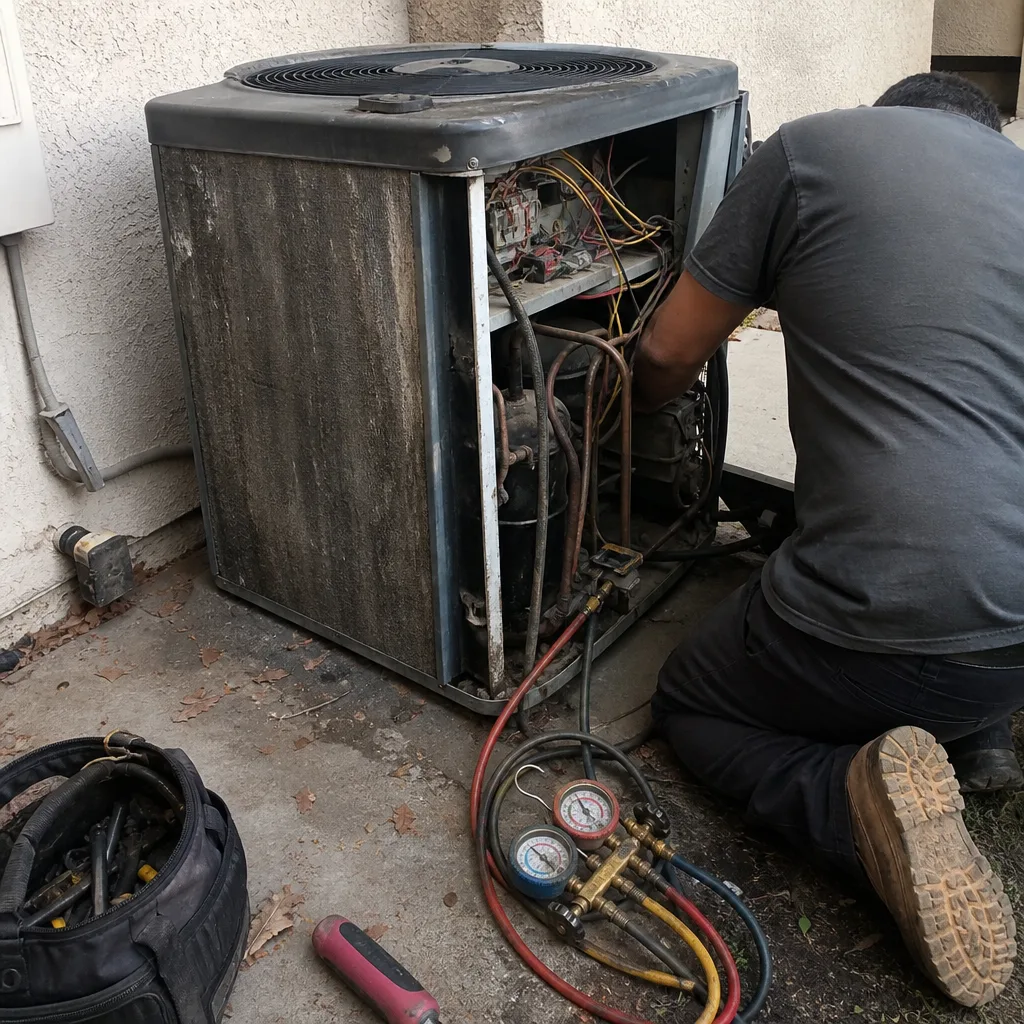 Before
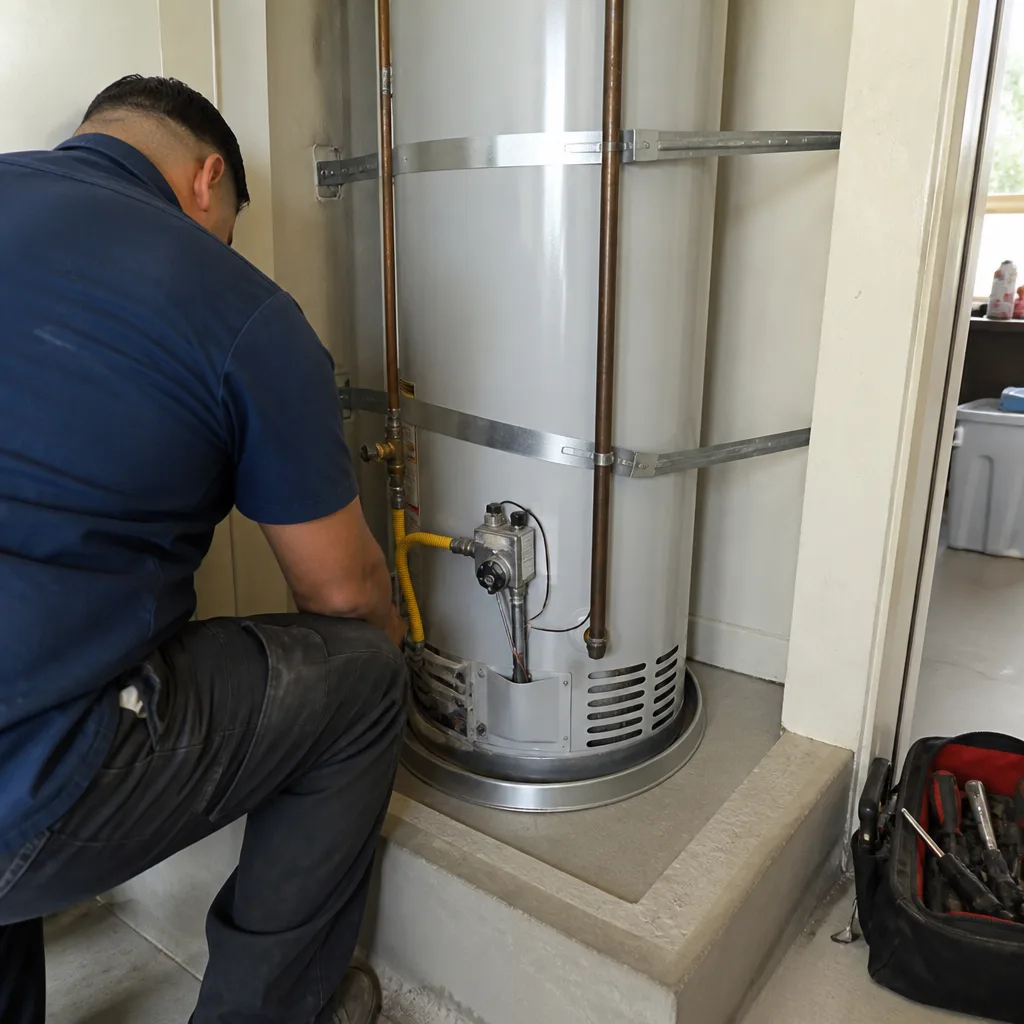 After
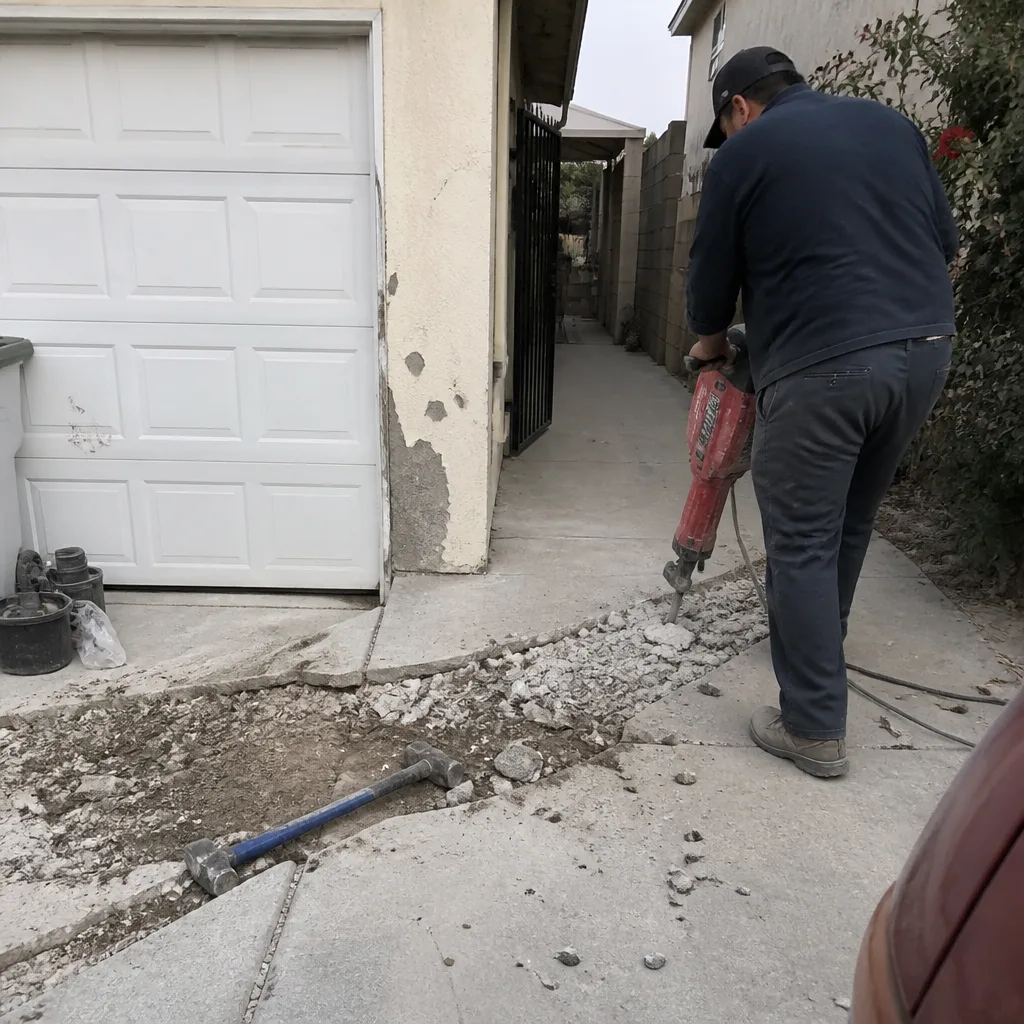 Before
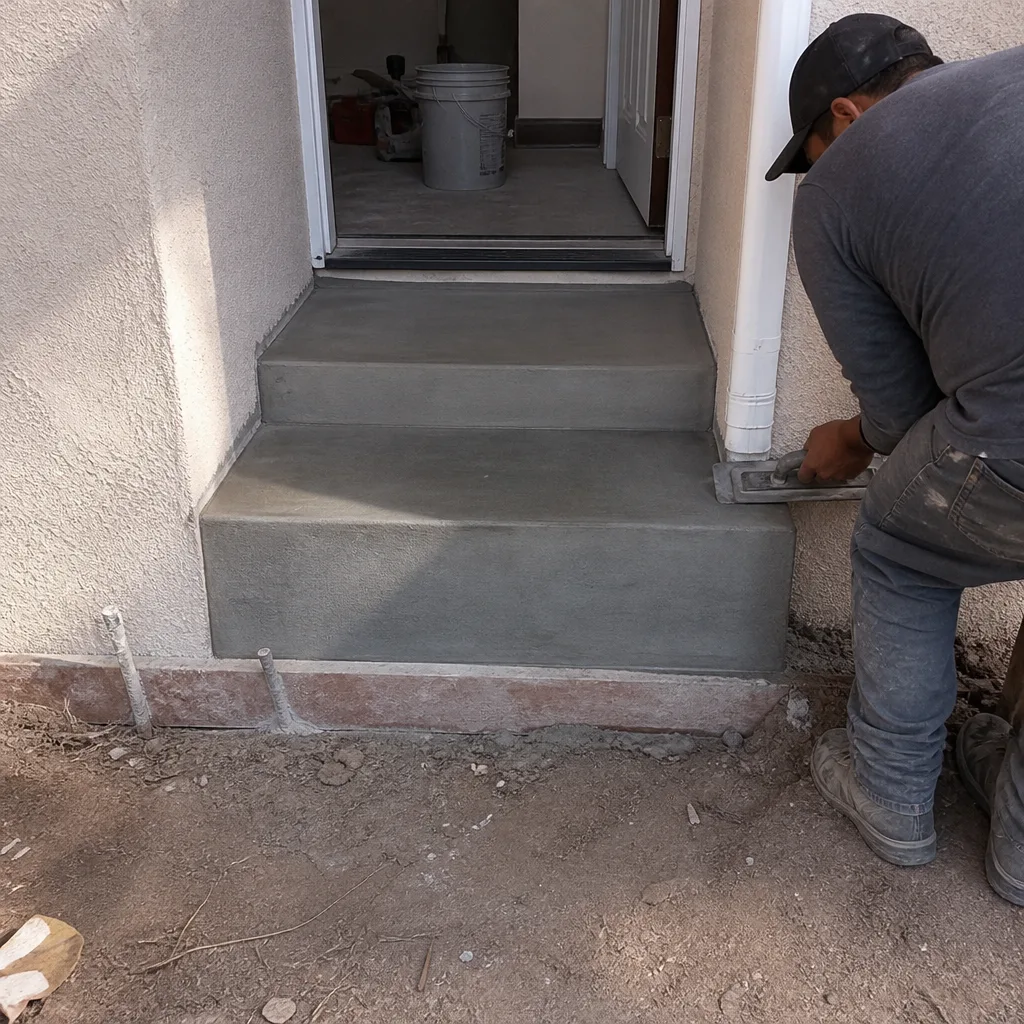 After
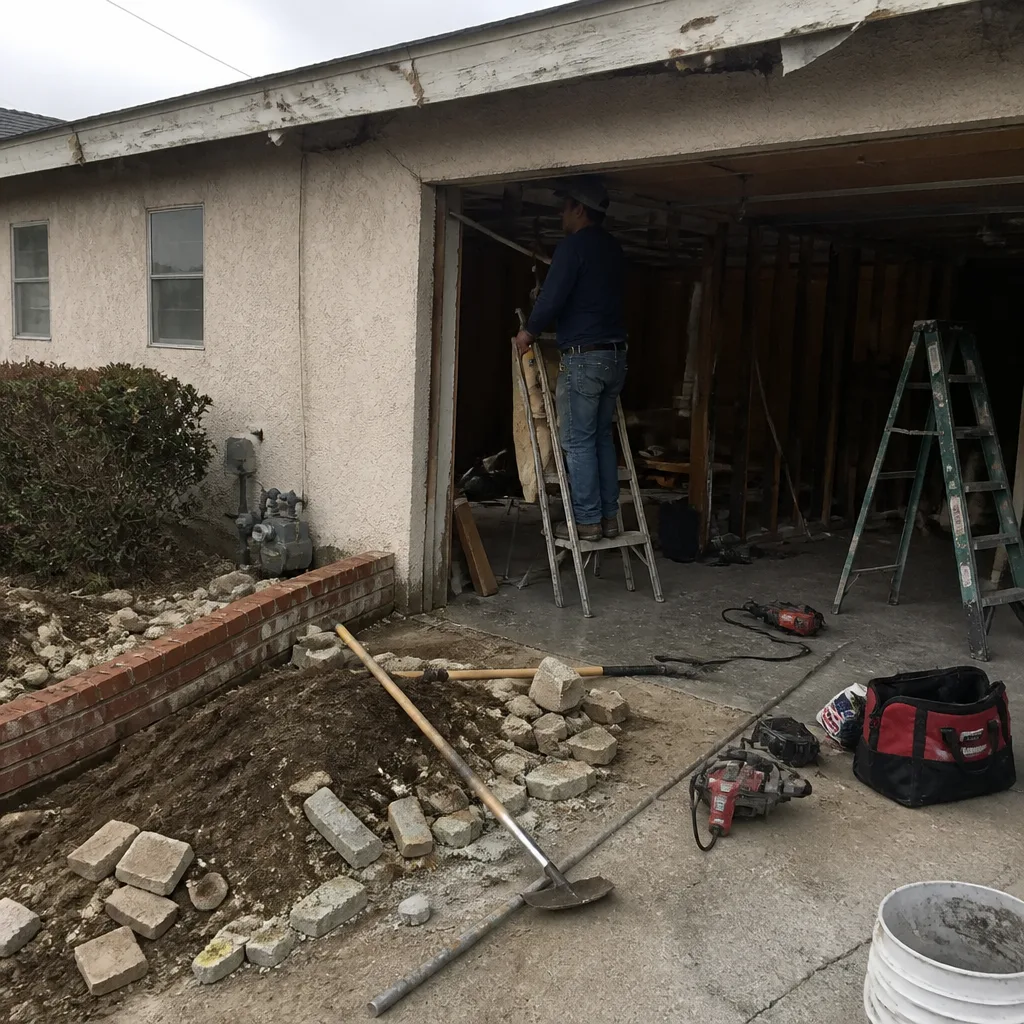 Before
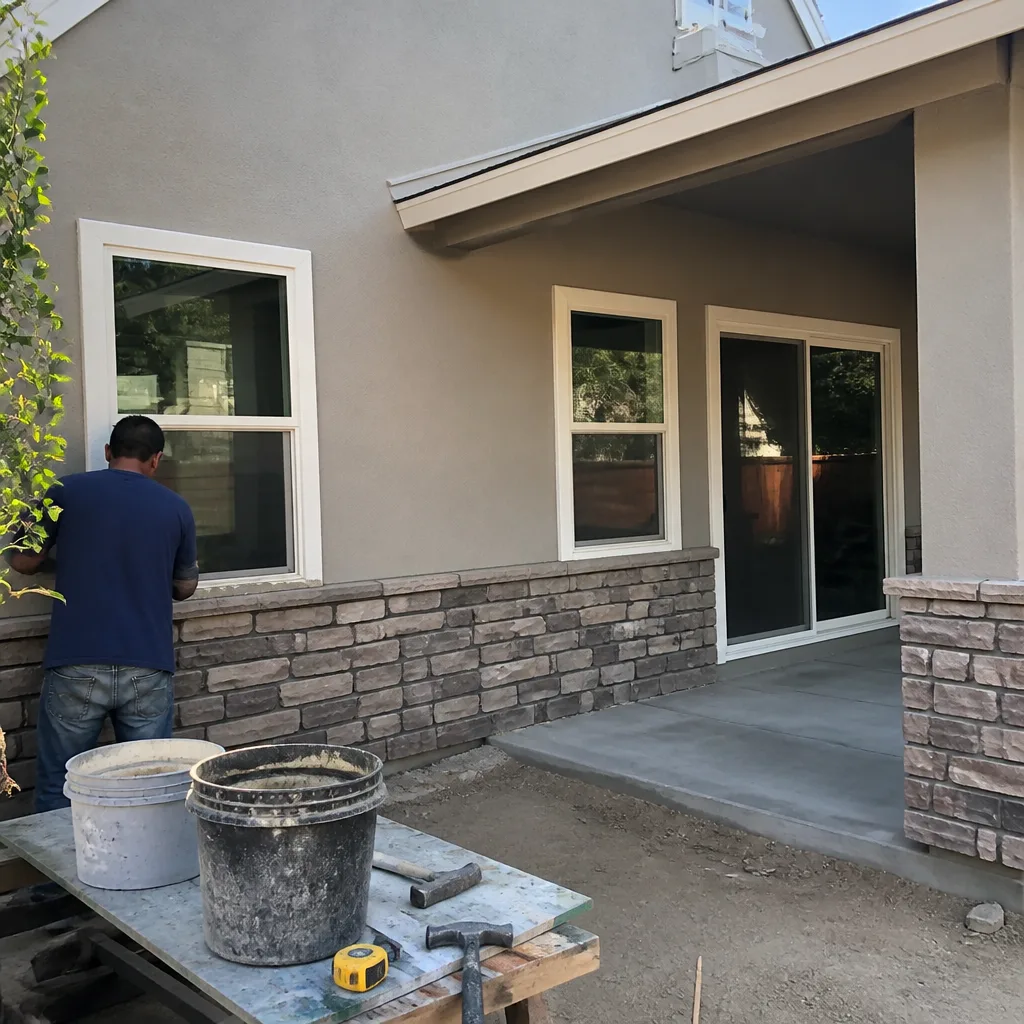 After