
Last updated October 31, 2026
 Home additions & ADU
 Kitchen remodeling
 Bathroom remodeling
 Roofing
 Windows & doors
 Driveway & pavers
 Fence
Free written scope consultation - allowances, timeline, and change-order rules on paper before a single trade is scheduled
Seasonal Construction Care for San Bernardino: Year-Round Homeowner’s Guide
San Bernardino averages 17 days per year over 100°F, experiences measurable Santa Ana wind events from October through March, and sits at the base of mountains that funnel storm water fast. That combination means the generic “California maintenance” advice you see online doesn’t apply here. Your stucco, your roof fasteners, your fence posts, and your foundation all contend with thermal cycling, wind-driven debris, and sudden runoff that coastal homeowners never face. This guide covers the construction and maintenance calendar that actually fits San Bernardino conditions, broken down by season, with specific materials and failure points to watch. For a broader overview, see our complete guide to construction in San Bernardino.
Quick Answer
Seasonal construction care in San Bernardino means aligning maintenance with four distinct stress periods: post-winter wind damage assessment in spring, sustained heat management in summer, pre-Santa Ana wind preparation in fall, and drainage protection during brief but intense winter rain events. If you’re hiring help, our complete general contractor guide for San Bernardino homeowners explains what to look for. The highest-return tasks are roof fastener and flashing inspection before wind season, attic ventilation checks before summer, and downspout grading fixes before the first mountain runoff arrives. Most of this work is inexpensive when caught early and expensive when deferred.
Styles & brands we work with
Table of Contents
- Spring (March – May): The Post-Wind Assessment Window
- Summer (June – September): Managing Sustained Heat and Expansion
- Fall (October – November): Pre-Santa Ana Wind Preparation
- Winter (December – February): Drainage and Runoff Protection
- Year-Round Material Choices for the Inland Empire
- Common Mistakes to Avoid
- When to Call a Professional
- Frequently Asked Questions
Spring (March – May): The Post-Wind Assessment Window
Spring in San Bernardino is not a gentle thaw. It’s the first sustained period after six months of intermittent Santa Ana events, and the heat is already ramping. March daytime highs sit in the low 70s, but by mid-May you’re brushing 90. That gives you roughly eight weeks of workable outdoor conditions to assess what wind season did to your home’s exterior and fix it before summer UV turns minor damage into major failure.
Here’s what we look at during spring inspections in San Bernardino:
- Stucco cracking and hairline fractures: Wind-driven debris, especially from the foothill corridors near Crestline and Highland, pits and cracks stucco over winter. A small crack lets moisture in, and by July the thermal expansion from triple-digit heat turns that crack into a spall. Spring is the time to seal it.
- Roof fastener integrity: Repeated wind cycling loosens nails and screws, particularly on tile roofs where the mechanical fasteners take lateral load. One loose tile at the eave becomes five after the next wind event.
- Paint and trim condition: UV degradation happens year-round here, but the spring window is your chance to repaint before the June heat makes paint application slow and uneven. Paint applied above 90°F skins over too fast and peels within two years.
- Fence post stability: Winter soil saturation followed by spring drying creates movement in post footings. A fence post that shifted half an inch in March leans three inches by September.
What makes San Bernardino different from, say, Riverside or Ontario, is the elevation spread. Homes north of the 210, up toward Verdemont and the university district, get more wind exposure than the flatlands south of the 10. Your spring list should be weighted by where you sit on that gradient. If you’re in Del Rosa or Muscoy, stucco and roofing take priority. If you’re in North Park or Arrowhead, fence posts and trim get hit harder.
Our spring checklist, in order:
- Walk the perimeter and photograph every stucco crack, loose tile, and lifted shingle.
- Check all roof penetrations – vent pipes, attic vents, and chimney flashing – for gaps caused by wind flex.
- Test every fence post by hand; mark any with more than a half-inch of play.
- Inspect window and door caulking on the south and west elevations first; those get the highest UV and thermal load.
- Call for repairs before June. Most contractors book out 4 to 6 weeks once spring hits in San Bernardino.
If you’re already planning a larger project – a home remodeling project in San Bernardino that touches exterior coatings, windows, or roofing – spring is the season to schedule it. The work happens in predictable weather, and you avoid the summer rush when crews are stretched thin.
Summer (June – September): Managing Sustained Heat and Expansion
San Bernardino’s summer is the most underrated threat to your home. People fixate on hurricanes in Florida and freeze-thaw in the Midwest, but sustained 100°F heat with single-digit humidity creates its own failure mode: rapid thermal expansion and contraction on every exterior surface. Your house literally moves more in July than it does in January.
The three systems that take the most summer abuse here:
- Attic ventilation: A properly ventilated attic should sit within 10 to 15 degrees of outdoor temperature. In San Bernardino, an under-ventilated attic hits 140°F and cooks your shingles from underneath, warps decking, and pushes your AC to run continuously. If your upstairs rooms won’t hold a setpoint in July, the problem is often the attic, not the condenser.
- Wood decking and fencing: Wood expands when it absorbs moisture and contracts when it dries. San Bernardino’s summer humidity routinely drops below 10%, which aggressively dries out cedar, redwood, and pressure-treated pine. Fasteners back out, boards cup, and railings loosen. The fix before the season is re-torquing screws and resealing; the fix during the season is catching problems early.
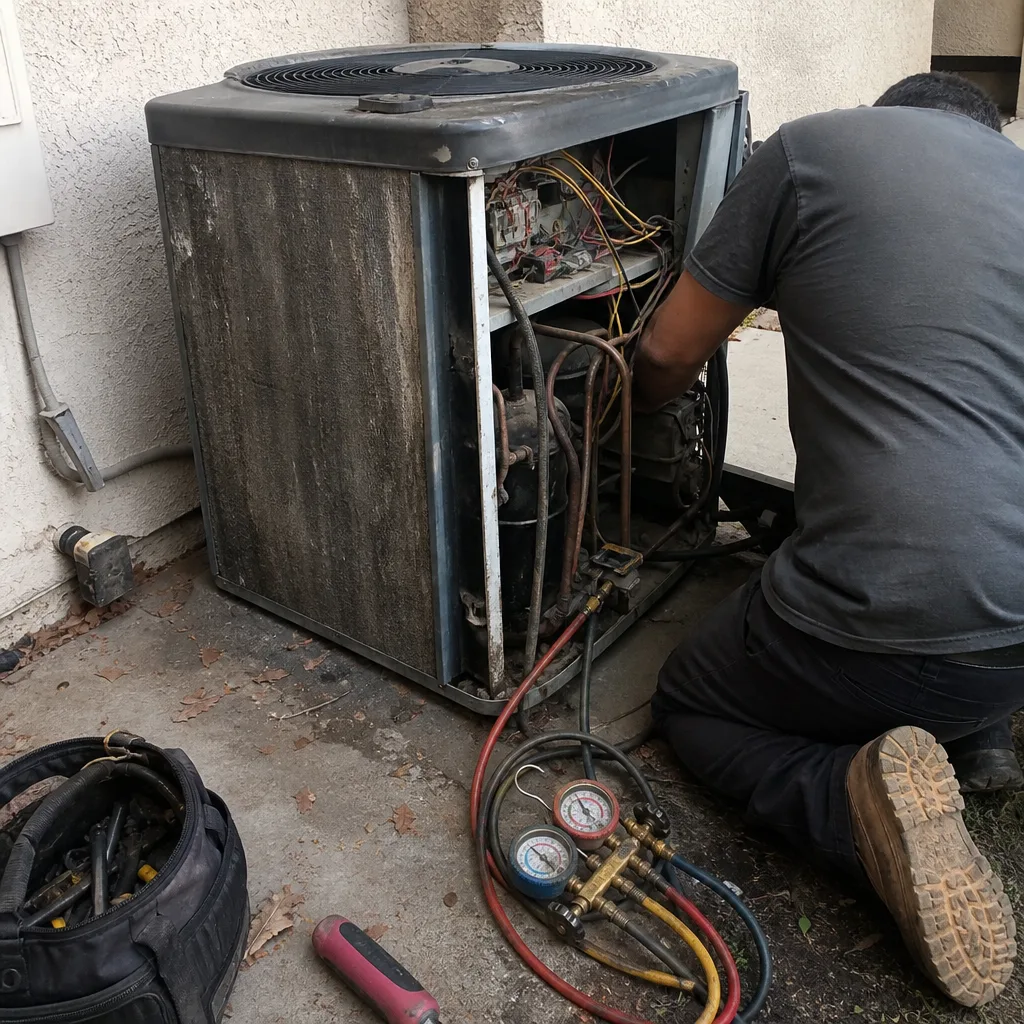
- Ductwork and HVAC filters: Dust is a fact of life at the base of the San Bernardino Mountains. Summer wind kicks up fine particulate that loads your filters and clogs your return. A loaded filter makes the blower work harder and pulls more dust into the ducts. This is the season to swap filters monthly, not quarterly.
- Gutter clearing before, not after, leaf drop: By mid-October, the cottonwoods and sycamores along the creek corridors are dropping heavily. Clear gutters before the first wind event pushes debris against the roofline. Then check again after the first major blow.
- Roof edge and flashing inspection: Every penetration, every eave edge, every valley. Wind doesn’t rip shingles off a roof; it catches an edge that was already vulnerable. Lifted flashing is the number one precursor to wind damage.
- Fence post and panel reinforcement: If you haven’t addressed fence stability since spring, now is the moment. A 6-foot privacy fence with loose posts becomes a domino run in a Santa Ana event. Steel brackets and deeper post settings hold up where shallow concrete footings fail.
- Deck and patio anchoring: Unsecured patio furniture, grills, and shade structures are the most common debris source during wind events. But less obvious is the deck itself: ledger boards pulling away from the house due to thermal cycling, and railing posts loosened over summer. Check both before wind season peaks.
- Dry debris removal from the yard: This isn’t just housekeeping. Palm fronds and dry brush against a fence line compound fire risk during red flag warnings, and San Bernardino sits in a high-severity wildland-urban interface zone along the foothills.
- Downspouts and extensions: Every downspout should discharge at least 4 to 6 feet from the foundation. A surprising number of San Bernardino homes still have downspouts dumping right at the stem wall, and over decades that consistent saturation erodes footing soil and invites slab heave.
- Grading and swales: Flat lots need positive grade away from the structure. If your yard slopes toward the foundation, or if a neighboring property’s runoff sheets across your lot, the time to fix it is before the first storm, not during it.
- Roof leak indicators: Winter rain exposes roof issues that summer heat masked. Water stains on ceilings, bubbling drywall tape, and musty smells in the attic are the classic signs. The source is often a flashing failure at a wall intersection or a valley that was collecting debris during wind season.
- Stucco and sill plate saturation: Splashback from hard surfaces – concrete walkways too close to the wall, planter beds built above the sill plate – soaks stucco and eventually migrates to framing. In older San Bernardino homes, the sill plate is often not pressure-treated, and sustained damp turns into rot within a few wet seasons.
- Caulks and sealants: High-performance hybrid polyurethane sealants hold up far better than standard latex or silicone in this environment. We specify brands like OSI and Sika for joint movement, and we avoid big-box acrylic caulk on exterior applications.
- Roofing: GAF, CertainTeed, and Owens Corning all manufacture products engineered for high-heat, high-UV regions, and their installer credentialing programs exist specifically to ensure the system is installed to handle wind uplift. San Bernardino sits in a wind zone that exceeds the default requirement for many standard shingle installations.
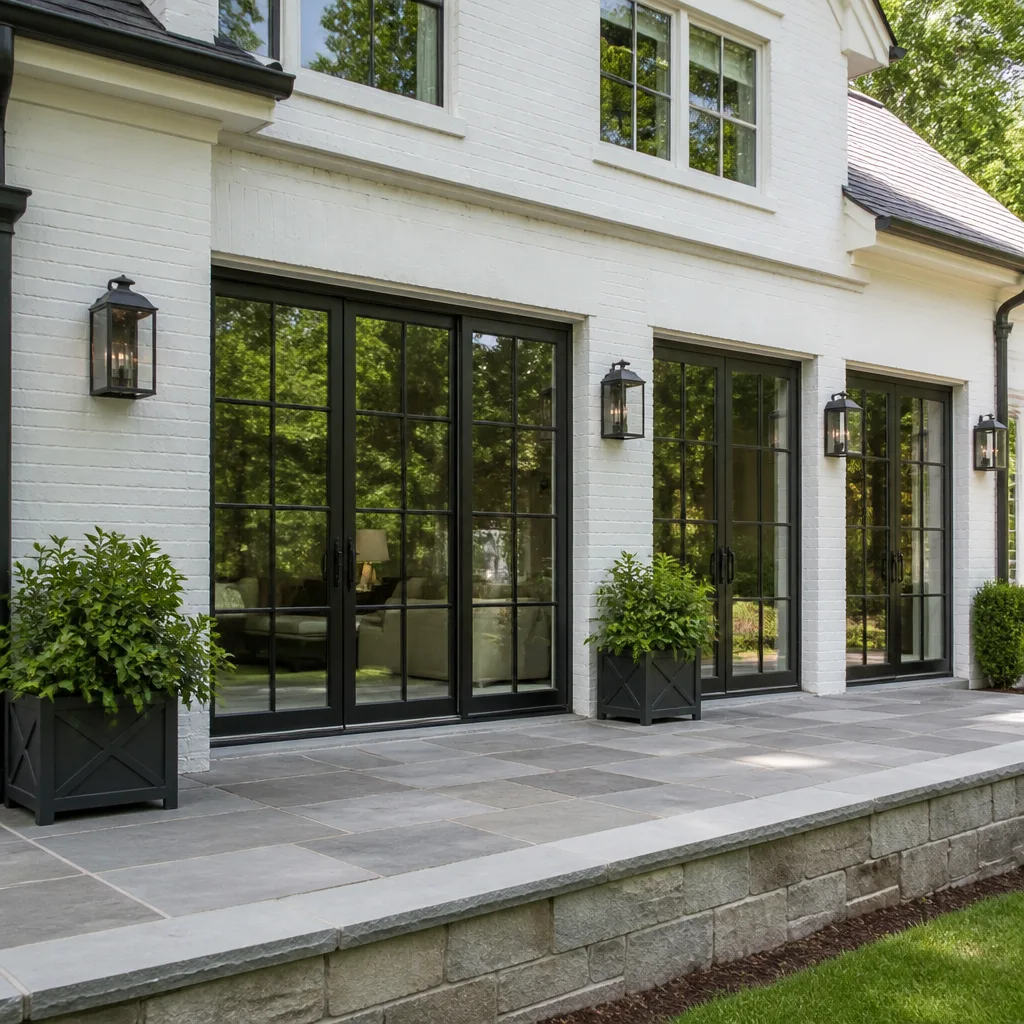
- Windows and doors: In the summer, single-pane aluminum windows turn a San Bernardino bedroom into an oven. Impact-rated products like PGT and CGI windows, or thermal break options from Therma-Tru doors, pay for themselves in both comfort and cooling load reduction. Even if you’re not in a wind-borne debris zone, the UV durability is measurably better.
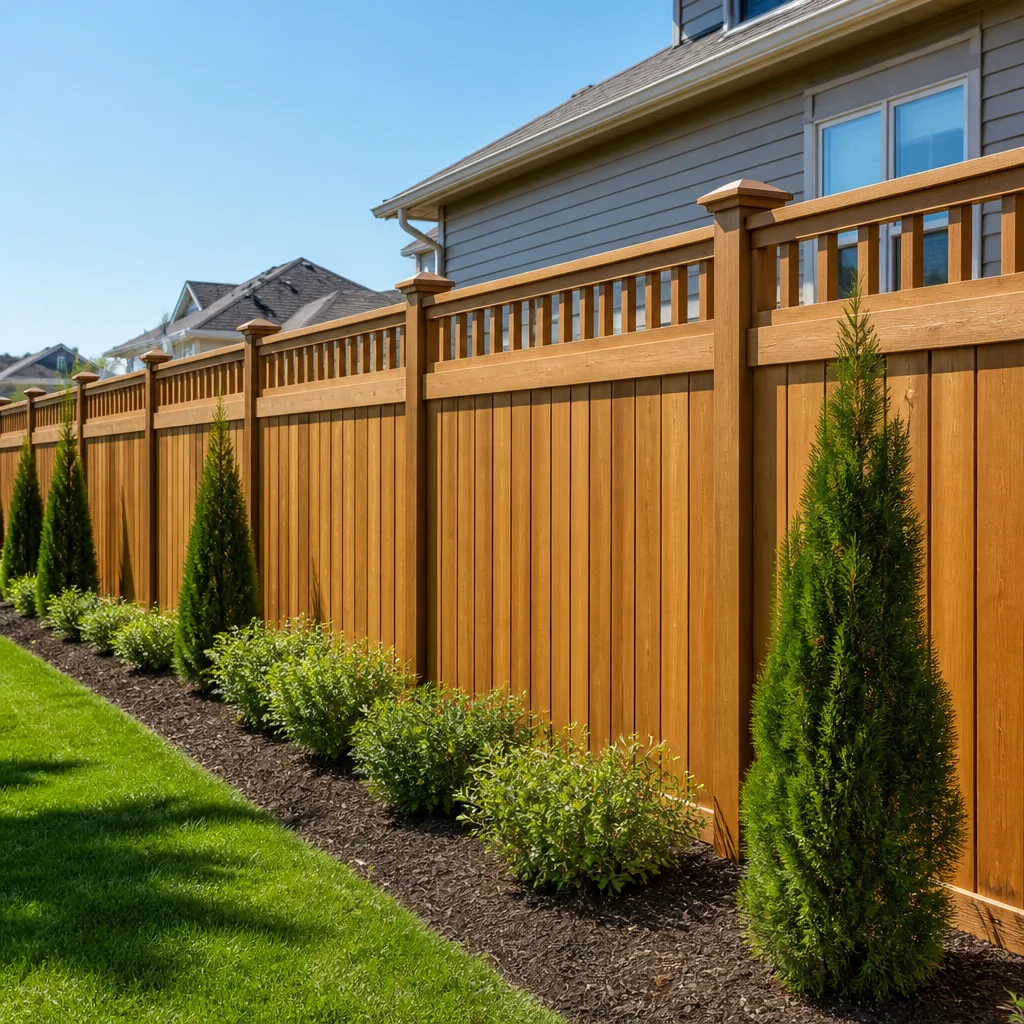
- Fencing: We avoid untreated pine and low-grade cedar for San Bernardino fences. The heat-dry cycle causes premature checking and fastener pullout. Redwood, cedar with proper treatment, or composite options like Bufftech hold up noticeably longer. The incremental cost is returned in years of service.
- Siding: James Hardie fiber cement is the dominant choice in the Inland Empire for a reason: it doesn’t expand and contract the way wood siding does, and it holds paint longer under UV. If you’re replacing siding anywhere in San Bernardino, it’s the baseline we recommend.
- Hardscape: Belgard, Unilock, and Techo-Bloc pavers are all engineered with aggregate bases and jointing systems that handle the kind of soil movement common on flat San Bernardino lots. Crushed aggregate base matters more here than on sandy coastal soils.
- Deferring gutter maintenance until December. By the time the first storm arrives, your gutters have been collecting wind-driven debris for two months. The best time to clear them is mid-October, before Santa Ana season peaks, and the second best time is right after the first major wind event.
- Ignoring small stucco cracks because “it’s just cosmetic.” A hairline crack in spring becomes a water intrusion point by winter. In San Bernardino’s thermal environment, small cracks grow fast. Seal them when you see them.
- Assuming your roof is fine because it’s not leaking. Roof failure in the Inland Empire is often a wind event waiting to happen. Loose fasteners and lifted flashing don’t leak in dry weather. They fail during the first Santa Ana of October.
- Planting foundation shrubs and then letting irrigation soak the wall. This is incredibly common in San Bernardino landscaping. Drip lines placed too close to the stem wall saturate stucco and framing wood over years, and the damage doesn’t show until an interior wall starts bubbling.
- Scheduling exterior paint or roofing for July. Paint doesn’t cure properly above 90°F, shingles get soft and prone to damage, and crews struggle to maintain quality in 110°F surface heat. Plan exterior work for spring or fall.
- Using the cheapest caulk from the hardware aisle. The $4 tube peels, cracks, and fails within one San Bernardino summer. The $12 tube lasts five years. It’s genuinely that simple.
- Ignoring grading because “the lot is flat so it doesn’t matter.” Flat lots need grading corrections more than sloped lots do, because water has nowhere to go. Without positive grade, water pools against the foundation every time it rains.
One thing we tell homeowners during summer inspections: check your expansion gaps. Concrete patios, paver borders, and hardscape joints need room to move. If a paver patio was installed with tight joints and no edge restraint, summer expansion will heave the field. The same principle applies to fence rails and deck boards – they need gaps that account for the Inland Empire’s 40-degree daily temperature swings.
Summer is also when home renovation in San Bernardino projects that involve exterior work should be planned, not started. You want materials on order, permits pulled, and the schedule locked so that heavy exterior work lands in October, not in August. Interior work, on the other hand, can run year-round – and honestly, running a kitchen remodel during summer heat is better than doing it in December when you want the house closed up.
If you have to do exterior construction in summer, specify materials accordingly. We use coatings and caulks rated for high-heat application, and we schedule roofline work for the early morning hours before surface temperatures climb past 120°F on asphalt shingles.
Fall (October – November): Pre-Santa Ana Wind Preparation
Santa Ana season officially starts in October in San Bernardino, and the city’s position relative to the Cajon Pass makes it one of the windiest corridors in the Inland Empire. The wind comes down the pass, funnels through the foothills, and hits the central and northern neighborhoods with sustained speeds that regularly top 40 mph, with gusts past 70 in stronger events. Dry, fast air is the signature characteristic – and it’s the dryness that turns wind into a construction problem.
What happens when 45 mph sustained wind hits a home for six hours: it finds every loose edge. Roof edge flashing lifts. Ridge caps peel. Fence panels act as sails. Dry leaves and pine needles from upslope collect in gutters and turn an ordinary gutter into a fire-loading strip. Loose stucco chips fly off and become projectiles.
Our fall preparation sequence for San Bernardino homes:
Fall is actually the best season for large exterior projects in San Bernardino. Temperatures drop into the 70s and 80s, the heat-related material handling problems go away, and you’re still months from the rainy season. If you’re planning a roof replacement, new siding, or a full general contractor project in San Bernardino that touches the building envelope, October and November are the months to execute.
Winter (December – February): Drainage and Runoff Protection
San Bernardino gets around 16 inches of rain annually, but it doesn’t fall evenly. The city sits at the base of the San Bernardino Mountains, and when atmospheric river events hit, runoff can arrive in hours, not days. A typical winter storm drops an inch in a single night. A major event can double that. The flat lots of central and south San Bernardino are especially vulnerable because they don’t have the natural slope that foothill homes use to shed water.
The critical winter inspection points:
One thing we tell homeowners in San Bernardino: don’t wait for a “big” rain year. The damage pattern that matters here is repeated small saturation events, not a single catastrophic flood. A downspout that dumps against the foundation through ten 1-inch storms does more structural harm than one 4-inch storm that flows away properly.
Year-Round Material Choices for the Inland Empire
The Inland Empire’s thermal cycling environment is harder on materials than most people realize. A surface that goes from 35°F before dawn to 85°F by 2 p.m. in January – and from 65°F to 115°F in July – experiences expansion and contraction stresses that coastal properties never see. The wrong caulk fails within a season. The wrong wood species cups within two years. The wrong coating chalks and fades within three.
What we specify for San Bernardino conditions:
The pattern here is simple: materials that survive in San Bernardino are the ones designed for high UV, high thermal cycling, and sustained dry wind. If a product is marketed for “moderate climates,” it’ll underperform here no matter how well it’s installed.
Common Mistakes to Avoid
When to Call a Professional
Some of this guide covers work you can do yourself: clearing gutters, checking fence posts, monitoring attic temperatures, swapping filters. But there are clear thresholds where doing it yourself becomes a risk multiplier rather than a money saver. Roof inspection, especially on a two-story home with a steep pitch or tile surface, is genuinely dangerous without proper training and fall protection. Same goes for any work involving roof fasteners, flashing, or ridge caps. Stucco repair that shows signs of moisture intrusion – not just surface cracking – requires opening the wall to assess framing damage, which is beyond a patch job. Foundation drainage fixes that involve regrading, installing French drains, or correcting downspout discharge are matters of getting it right or getting a wet slab. And any project that touches multiple systems – roof, siding, windows, and drainage – benefits from having a single contractor who owns the whole scope rather than coordinating three separate specialists. Toolbox Contractors offers free estimates in San Bernardino – call (855) 382-3257.
We approach these assessments the way we approach every project: one contractor accountable for the entire building envelope, using materials from the 50-plus brands we work with. When you call for a seasonal inspection, you’re not getting a roofer who only sees shingles or a stucco guy who only sees walls. You’re getting a full-scope evaluation of how your home’s systems interact under San Bernardino conditions. From the cabinets to the roof.
Frequently Asked Questions
Most San Bernardino homeowners spend between $400 and $1,200 annually on seasonal maintenance services, which typically covers gutter clearing, caulking and sealant touch-ups, fence tightening, and a basic roof inspection. More extensive work, like a full stucco repair or roof fastener replacement, adds to that figure depending on scope. Call (855) 382-3257 for an exact quote on your home’s specific needs.
Wind and heat are the two biggest culprits. Santa Ana winds loosen roof fasteners, lift flashing, and topple weakened fences. Sustained summer heat bakes caulking and accelerates stucco cracking. Homes in the northern neighborhoods of San Bernardino, closer to the foothills, typically see more wind damage, while flatland homes see more foundation and drainage issues from winter runoff.
Yes, and arguably more important than on older homes. New homes in San Bernardino are built to current code but are still subject to the exact same wind, UV, and runoff conditions as older homes. The first two years of a home’s life is when foundation drainage issues and material defects show up. Catching them early is cheaper and easier than letting them compound.
San Bernardino’s thermal cycling – the repeated shift from cold mornings to hot afternoons – plus sustained UV exposure and dry winds breaks down exterior coatings faster than in coastal environments. Paint typically lasts 5 to 7 years here versus 8 to 10 in coastal communities, and caulking needs replacement every 2 to 3 seasons. Products rated for high heat and UV, like polyurethane sealants and acrylic elastomeric coatings, hold up best.
Twice a year: once in spring, after the wind season has passed, and once in fall, before the next wind season begins. Spring inspections catch damage from winter storms and Santa Anas. Fall inspections ensure your roof is ready for the wind events that peak from October through March. Call (855) 382-3257 to schedule a free roof and envelope inspection.
Most seasonal maintenance tasks – gutter cleaning, caulking, fence tightening, filter replacement – don’t require permits. However, structural repairs, roof replacements, and any work that involves electrical or plumbing systems generally do. We handle permitting for every project we take on, so you don’t have to navigate the city’s building department alone.
The Bottom Line
San Bernardino’s seasonal extremes mean your home needs a maintenance calendar that reflects the city’s specific climate, not generic Southern California advice. Spring is for assessing post-wind damage. Summer is for managing sustained heat and expansion. Fall is for bracing against Santa Anas. Winter is for handling mountain runoff. Each season has a specific set of tasks, and each task prevents a bigger problem later. Most of this work is affordable when done on schedule and expensive when deferred. The homeowners who keep up with it – or bring in a contractor who understands the Inland Empire’s unique conditions – spend less over the life of their home and avoid the surprise failures that catch others off guard. That’s what Toolbox Contractors home maintenance is about: being proactive, not reactive.
Written by the team at Toolbox Contractors, serving San Bernardino since 2013. Explore more guides & resources on our blog.
See the difference
 Before
 After
 Before
 After
 Before
 After