
Last updated October 31, 2026
 Kitchen remodeling
 Bathroom remodeling
 Home additions & ADU
 Roofing
 Windows & doors
 Driveway & pavers
 Fence
Free written scope consultation - allowances, timeline, and change-order rules on paper before a single trade is scheduled
Construction Permits, Codes & Inspections in CA: What You Need to Know
Unpermitted work is the single most common reason California home sales fall out of escrow, and in San Bernardino, retroactive permit applications can cost more than the original project. This isn’t a scare tactic. It’s what we see every month when homeowners try to sell a house with a finished basement that never got signed off, or a water heater swap that seemed too minor to bother with. This guide walks you through what actually happens when you pull a permit in San Bernardino, which inspections slow projects down, and which code requirements surprise even experienced contractors. You’ll learn how California Title 24 affects remodels (not just new builds), what each inspection phase actually checks, and why permitted work matters when an insurance adjuster shows up after a fire or earthquake.
Quick Answer
Construction permits in California are a legal requirement for most structural, electrical, plumbing, and mechanical work, and in San Bernardino the process runs through the city’s Building & Safety Division. You need a permit for additions, ADUs, roof replacements, panel upgrades, water heater swaps, and any wall relocation before work starts. Inspections happen at set phases (foundation, framing, rough MEP, final) and must be scheduled through the city’s online portal or by phone, with most correction notices issued for missed Title 24 energy details, improper strapping, or documentation gaps rather than major structural failures.
Styles & brands we work with
Table of Contents
- Why Permits Matter More Than Most Homeowners Think
- Which Projects Always Require a Permit in California
- The San Bernardino Permit Process: Fees, Timelines, and the Portal
- Title 24 Energy Compliance: What a Kitchen Remodel Actually Triggers
- What Happens During Each Inspection Phase
- Why Inspectors Issue Correction Notices in the Inland Empire
- How Permitted Work Protects Homeowners During Insurance Claims
- Common Mistakes to Avoid
- When to Call a Professional
- Frequently Asked Questions
Why Permits Matter More Than Most Homeowners Think
A permit is not a tax or a bureaucratic speed bump. It’s a record that work was done to code, reviewed by a third party, and signed off by someone who carries liability if it wasn’t. When you sell a home in San Bernardino, the buyer’s lender and insurance company both want to see that record. Without it, you’re selling a house with an asterisk.
We’ve watched a $35,000 kitchen remodel in San Bernardino turn into a $12,000 retroactive permit application because the previous owner swapped the electrical panel without pulling paperwork. The city had to open walls to verify the wiring, then charge plan review fees on top of inspection fees. The retroactive cost was roughly one-third of the original project cost, and the sale nearly collapsed while the city processed the paperwork.
Permits also matter for insurance. If a fire starts in a kitchen with unpermitted electrical work, the carrier can deny the claim outright. We work on homes throughout the Inland Empire, and after the 2023 storms, we saw several homeowners discover that unpermitted patio covers and carports were excluded from their wind damage claims. The carrier’s argument was simple: unpermitted structures aren’t covered because no one verified they were built to withstand the wind load they actually faced.
For a homeowner planning a mid-to-large renovation, permits are the difference between a house with a documented, verifiable history and a house with a question mark. That question mark has a dollar value, and it’s always paid at the worst possible time: during escrow, during a claim, or during a city code enforcement sweep.
Which Projects Always Require a Permit in California
California’s building code is broad, and the state gives individual cities power to add local requirements on top of it. San Bernardino follows the California Building Standards Code (Title 24) with city-specific amendments. Here’s what always needs a permit, according to both state law and local enforcement practice.
The “it’s just cosmetic” assumption causes more problems than any other homeowner misconception. Cosmetic work means paint, flooring, cabinet refacing, or swapping a light fixture in the same location. The moment you move a wall, change a window opening, add an outlet, or replace a water heater, you’ve left cosmetic territory and entered permit territory.
Projects that always require a permit in California:
- Structural changes: Removing or relocating any load-bearing wall, adding a beam, changing a roofline, or cutting new window and door openings. Even a non-load-bearing wall removal needs a permit if it changes the floor plan and affects egress paths.
- Additions and ADUs: Any new square footage, including attached and detached accessory dwelling units. San Bernardino has accelerated ADU permitting under state law, but the permit is still mandatory and comes with Title 24 requirements.
- Electrical work: Panel upgrades, new circuits, running wire to a new location, or installing an EV charger. Replacing an outlet or switch in the exact same location does not need a permit, but adding one does.
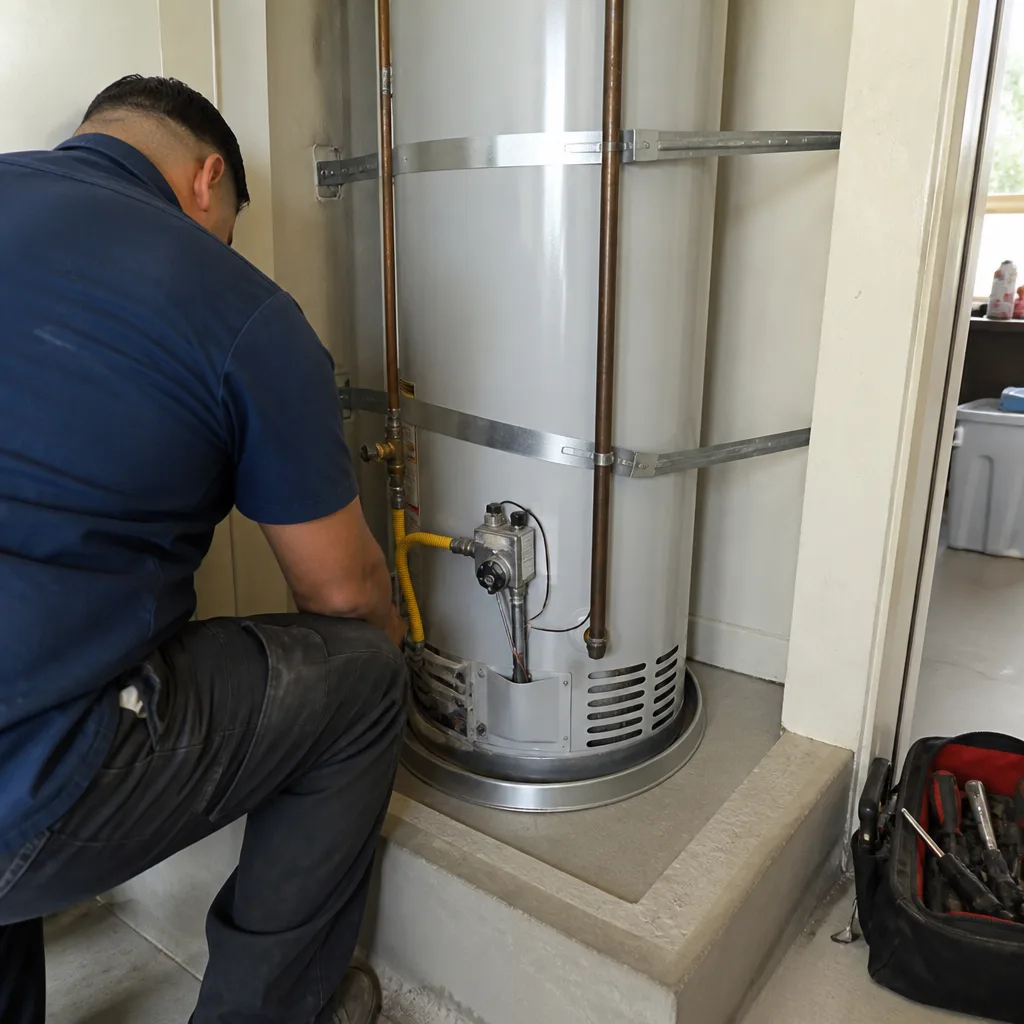
- Plumbing work: Moving a sink, adding a bathroom, replacing a water heater, or running new gas lines. A water heater swap without a permit is one of the most common retroactive permit nightmares we see in San Bernardino.
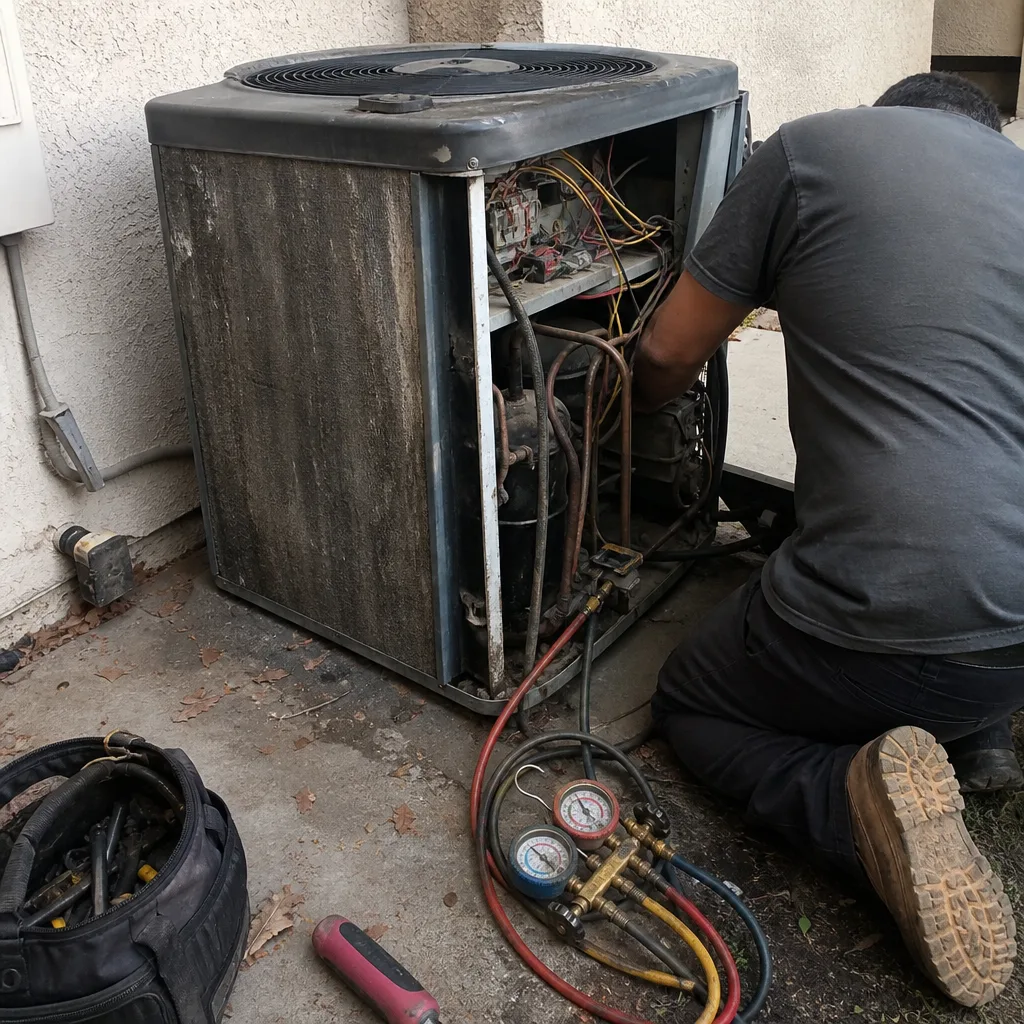
- HVAC changes: Replacing a furnace, adding an AC unit, or installing ductwork. An HVAC swap without a permit is a code violation, and an unpermitted AC install is a frequent insurance denial trigger.
- Roof replacement: Any full roof replacement in California requires a permit, including tear-off and re-roof projects. This is where our work with GAF, CertainTeed, and Owens Corning systems matters: those brands’ warranties require installer credentialing and permitted, inspected installations.
- Fences over 7 feet: Fences below 7 feet generally do not need a permit in San Bernardino, but anything taller does, as do retaining walls over 4 feet with surcharge or any retaining wall supporting a structure.
- Window replacements that change the opening: Swapping a window for the same size unit typically doesn’t need a permit, but enlarging an opening, adding a window where none existed, or changing an egress window requires one. This is why we specify PGT, CGI, and ES Windows for projects that do change openings: the structural and egress requirements get stricter, and the window brand must meet the code’s performance specs.
If you’re unsure whether your project needs a permit in San Bernardino, the city’s Building & Safety Division can answer that question in a phone call. The wrong assumption costs more than the phone call.
The San Bernardino Permit Process: Fees, Timelines, and the Portal
San Bernardino uses an online permitting portal, and in our experience, the quality of your submittal determines the timeline more than the city’s workload. A clean, complete submittal with proper drawings, load calculations, and Title 24 documentation moves through plan review faster than a partial package that bounces back for missing pages.
Here’s the step-by-step process for a typical residential remodel in San Bernardino:
- Determine if your project needs a permit. Call the city’s Building & Safety Division or check the city’s published exempt work list. When in doubt, call. The answer is often yes.
- Prepare the submittal package. This usually includes architectural drawings, structural calculations, a site plan, and energy compliance documentation (Title 24 forms). For kitchens and baths, you’ll also need plumbing and electrical plans. A general contractor who handles full-scope projects will prepare this as part of the job, which is why a General Contractor in San Bernardino who knows the city’s expectations is worth the coordination they remove.
- Submit through the online portal. San Bernardino’s portal accepts digital submittals. Pay the plan review fee at submittal. Fees are calculated on project valuation: expect a kitchen remodel permit in San Bernardino to run roughly $800 to $2,500 depending on scope, with ADU permits running into the $3,000 to $8,000 range after school fees and impact charges.
- Respond to plan review comments. Most first submittals come back with correction requests. Typical turnaround for a residential plan review in San Bernardino is 2 to 6 weeks depending on workload, and each resubmittal adds another review cycle. This is a common timeline killer for home remodeling in San Bernardino.
- Pay the permit fee and receive the permit card. Once approved, pay the remaining fees and the permit is issued. The permit card must be posted on the job site.
- Schedule inspections at each phase. Inspections are booked through the portal or by phone. San Bernardino typically schedules inspections for the next business day when requested before the cutoff time, but larger jobs with multiple trades can take longer to coordinate.
Plan review timelines in San Bernardino have stretched since the ADU boom began, and we’ve seen simple kitchen remodels take longer than expected because the city’s staffing hasn’t kept pace with the volume of home renovation in San Bernardino activity. The best way to protect your timeline is to submit a package that’s complete on day one.
Title 24 Energy Compliance: What a Kitchen Remodel Actually Triggers
Most homeowners think Title 24 is a new-build requirement. It isn’t. California’s energy code applies to additions, alterations, and even fixture replacements in many cases. If you’re remodeling a kitchen in San Bernardino, you will almost certainly need Title 24 documentation, and it may trigger a whole-house energy calculation you didn’t expect.
Here’s how Title 24 interacts with common remodel scopes:
- Kitchen remodels that move walls or change glazing: If you’re replacing a window, adding a skylight, or changing the kitchen’s orientation to the sun, you’ll need a Title 24 energy compliance form. This is calculated using approved software (EnergyPro, CBECC-Res) and submitted with your permit application.
- Adding square footage: Any addition over 50 square feet triggers a whole-house energy calculation. The existing home’s envelope, HVAC, and water heating all get scored, and the addition must bring the whole house into compliance with current code. This surprises homeowners who thought their 120-square-foot bump-out was a small project.
- Replacing HVAC equipment: A new furnace or AC unit must meet current Title 24 efficiency minimums, and the ductwork must be tested for leakage on most remodels. The HERS rater test adds a couple hundred dollars and a day of coordination to a project.
- Replacing windows and doors: New windows and doors in California must meet U-factor and SHGC requirements specific to San Bernardino’s climate zone (Zone 10 for most of the city). This is one reason we specify brands like PGT, CGI, and ES Windows for window replacement projects: those brands manufacture units that hit California’s Title 24 performance targets without custom ordering delays.
- Water heaters: New water heaters in California must meet Title 24 efficiency standards, and most require a permit with a simple inspection. The swap itself is straightforward, but skipping the permit is the single most common unpermitted item we find in San Bernardino homes.
A full-scope contractor who handles kitchens, windows, and roofing under one roof is positioned to deal with Title 24 as a single compliance exercise rather than three separate ones. When one company owns the whole permit package, the Title 24 forms, the structural calculations, and the inspection schedule all line up instead of colliding.
What Happens During Each Inspection Phase
Inspections are the enforcement mechanism for everything on your permit. The inspector is checking that the work matches the approved plans, meets the code sections cited on those plans, and was installed by someone who understood the details. Here’s what each standard phase actually covers on a San Bernardino remodel.
- Foundation inspection: For additions and ADUs, the inspector checks excavation depth, rebar placement and spacing, anchor bolt layout, and form dimensions before concrete is poured. This inspection must happen before the pour. If the concrete goes in without a foundation inspection, the city can require destructive testing to verify the work, which means cutting concrete cores.
- Framing inspection: The inspector verifies stud spacing, header sizing, shear wall nailing, hold-down hardware, and roof framing. This is the most correction-heavy inspection on a typical remodel because it’s where the structural details live. In San Bernardino, where seismic requirements are strict, missing hold-downs and improper shear wall nailing are the top framers’ mistakes.
- Rough MEP inspection (mechanical, electrical, plumbing): This happens after the walls are framed and the rough-in work is done but before drywall goes up. The inspector checks wire gauge and circuit protection, pipe slope and venting, and duct installation. This is also where Title 24 compliance gets verified on the energy side. Any problem found here is cheaper to fix than after drywall.
- Insulation inspection: In many San Bernardino remodels, insulation gets its own inspection before drywall. The inspector checks R-values, installation quality, and Title 24 required insulation levels for the climate zone. This is often folded into the rough inspection but your permit may list it separately.
- Final inspection: The inspector walks the finished job and confirms everything matches the approved plans: fixtures in place, smoke and CO detectors installed, egress windows where required, and the site cleaned up. The final inspection is what closes the permit and creates the permanent record of compliance.
Each inspection is scheduled through the city’s portal, and the inspector’s decision is either “approved” or “correction notice” with a list of items to fix and a re-inspection date. Re-inspections cost money and time, and on a tight remodel timeline, a failed final inspection can push move-in back a week.
Why Inspectors Issue Correction Notices in the Inland Empire
The overwhelming majority of correction notices are not about shoddy work. They’re about documentation gaps and small details that were either missed or assumed. In our experience across Inland Empire jurisdictions, here’s what inspectors actually flag, in order of frequency.
- Missing or incomplete Title 24 documentation: The energy forms didn’t match the built conditions, or the HERS test wasn’t scheduled, or the window specs didn’t match what was installed. This is the number one correction item on remodel finals.
- Improper strapping and hardware: In California’s seismic zones, inspectors look hard at strap placement, hold-down bolts, and shear panel nailing. A wall that’s framed correctly but strapped incorrectly will fail, and it’s expensive to fix after drywall.
- Egress problems: Window openings that don’t meet egress minimums, or a new bedroom without a compliant window. This comes up constantly on garage conversions and basement finishes.
- Electrical panel labeling issues: Circuits that aren’t labeled on the panel schedule, or AFCI/GFCI protection missing on required circuits. The 2023 NEC requirements tightened AFCI coverage, and inspectors in San Bernardino are enforcing them.
- Plumbing venting mishaps: Improper vent size, an AAV (air admittance valve) installed where the code doesn’t allow one, or a drain slope that’s off. These are picky details, and they fail inspections routinely.
- Missing smoke and CO detectors: California requires smoke detectors in every sleeping room and CO detectors on every level of the home. This is the cheapest fail to avoid and one of the most common.
None of these are exotic. They’re all avoidable with a contractor who’s read the city’s current code amendments and follows a general contractor maintenance checklist for San Bernardino homeowners to know what this jurisdiction’s inspectors emphasize. The correction notice itself isn’t a penalty; it’s the city’s way of making sure the record shows a house that was actually built to the code it was permitted under.
How Permitted Work Protects Homeowners During Insurance Claims
San Bernardino sits in a fire-prone region and shakes periodically. The city has been hit by two major wildfires in the last decade that destroyed homes in the foothills, and insurers have responded by tightening underwriting standards for homes throughout the Inland Empire. Permitted work is now a core piece of your insurance risk profile.
When an adjuster evaluates a claim, they pull the permit history from the city’s records. If the fire started in a kitchen that was remodeled without permits, the adjuster’s first question is whether the electrical work caused the fire. If the answer is yes, or if the answer can’t be proven either way, the claim can be denied or reduced. We’ve watched this happen after fire events in the San Bernardino foothills, and the financial impact on homeowners is catastrophic.
The same logic applies to earthquake claims. Unpermitted structural work (a wall removed, an opening cut, a beam replaced) gives the insurer grounds to argue that the structure was compromised before the earthquake hit. The permit record is your evidence that the work was done to current seismic code, inspected, and approved.
For roof claims, which are common in San Bernardino due to high winds and occasional hail, a permitted roof replacement with a documented final inspection is much harder for an insurer to dispute than an unpermitted re-roof. This is also why we install GAF, CertainTeed, and Owens Corning systems: those manufacturers’ warranties require permitted, inspected installations, which creates a second layer of documentation that supports your claim.
The permit is the cheapest insurance you’ll ever buy on a construction project. The permit fee is a rounding error compared to what a denied claim costs.
Common Mistakes to Avoid
- Assuming “cosmetic” means “no permit.” Moving an outlet, adding a window, or converting a closet to a bathroom all need permits. Cosmetic means paint, flooring, and fixture swaps in the same location, and nothing more.
- Skipping the permit on a water heater swap. This is the most common unpermitted item in San Bernardino homes, and it’s a liability when you sell. A water heater permit costs a fraction of what a retroactive one costs.
- Submitting an incomplete plan review package. Every missing page adds a review cycle to your timeline in San Bernardino, and the city’s workload means each cycle can add two to four weeks to a project.
- Not understanding Title 24 triggers before design. Homeowners often design a kitchen remodel first and learn about Title 24 compliance after the plans are drawn. Understanding the energy requirements before you design saves money and time.
- Pouring concrete before the foundation inspection. This is a catastrophic mistake for an ADU or addition. The city can require destructive testing, which means core drilling to verify the footing, and the cost is entirely on the contractor or homeowner.
- Hiring a contractor who won’t pull permits. Any contractor who suggests skipping permits is transferring risk to you. The contractor’s liability ends when the check clears; yours doesn’t.
- Expecting permit timelines to match pre-2020 norms. San Bernardino’s plan review volume has risen sharply due to ADU demand, and the city hasn’t scaled staffing proportionally. Build the timeline into your project plan from day one.
When to Call a Professional
Permit navigation is not a DIY vs professional construction decision you want to get wrong on a kitchen gut, bathroom overhaul, roof-plus-windows combo, or ADU. The permit package, Title 24 compliance forms, structural calculations, and inspection scheduling are a full-time coordination job on a mid-size remodel, and mistakes in the submittal directly extend the timeline. A full-scope general contractor who prepares the permit package, schedules the inspections, and manages the correction list is doing work you can’t outsource to an online tutorial.
Toolbox Contractors offers free estimates in San Bernardino. We prepare permit packages, manage inspections through the city’s portal, and handle Title 24 compliance as part of the job. Call (855) 382-3257 to talk through your project. The estimate is free, and the permit conversation is included.
Frequently Asked Questions
A building permit in San Bernardino typically costs $800 to $2,500 for a kitchen or bathroom remodel, depending on project valuation and the number of trades involved. ADU permits run higher, usually $3,000 to $8,000 after school fees and impact charges. Call (855) 382-3257 for a project-specific estimate that includes permit costs.
Residential plan review in San Bernardino typically takes 2 to 6 weeks for a first review, with additional cycles adding 2 to 4 weeks each. Simple over-the-counter permits (water heater, re-roof) can be issued in days if the submittal is complete. Call (855) 382-3257 if you need a realistic timeline for your specific scope.
If the city discovers unpermitted work in San Bernardino, you’ll receive a code enforcement notice and a stop work order if work is ongoing. You’ll then need to file a retroactive permit application, pay plan review and permit fees, and open walls or ceilings as needed for inspection. If the work fails inspection, you’ll fix it at your own cost. Call (855) 382-3257 if you need help bringing unpermitted work into compliance.
A kitchen remodel needs a permit in California if you’re moving walls, changing the electrical or plumbing layout, adding new circuits, or replacing windows. Cabinet refacing, countertop replacement, and paint do not need permits. Most full kitchen remodels in San Bernardino require permits and Title 24 energy documentation. Call (855) 382-3257 to confirm whether your kitchen scope needs a permit.
Title 24 is California’s energy code, and it applies to additions, alterations, and equipment replacements in San Bernardino, not just new construction. Any addition over 50 square feet triggers a whole-house energy calculation, and new HVAC, windows, and water heaters must meet current Title 24 efficiency standards. Call (855) 382-3257 to understand what Title 24 means for your specific project.
Yes, homeowners can schedule inspections through the city’s online portal or by phone, but you’ll need to be present for the inspection and have the approved plans on site. Most homeowners hire a contractor to manage inspection scheduling because the contractor knows what the inspector will check and can be there to answer questions. Call (855) 382-3257 if you want a contractor to handle the inspection process for you.
The Bottom Line
California’s permit system isn’t a bureaucratic obstacle; it’s a documentation system that protects your house’s value, your insurance coverage, and your ability to sell. San Bernardino’s process has its specific fees, timelines, and inspection emphases, and the homeowners who navigate it well are the ones who plan for it from the start. Skipping permits saves a few thousand dollars today and costs many times that when escrow falls apart, a claim is denied, or the city forces a retroactive application. Pull the permit, pass the inspections, close the file, and you’ll have a house with a clean record rather than a question mark. For more guides & resources on navigating San Bernardino construction, explore our blog.
Written by the team at Toolbox Contractors, serving San Bernardino since 2013.
See the difference
 Before
 After
 Before
 After
 Before
 After