
Last updated October 31, 2026
 Home additions & ADU
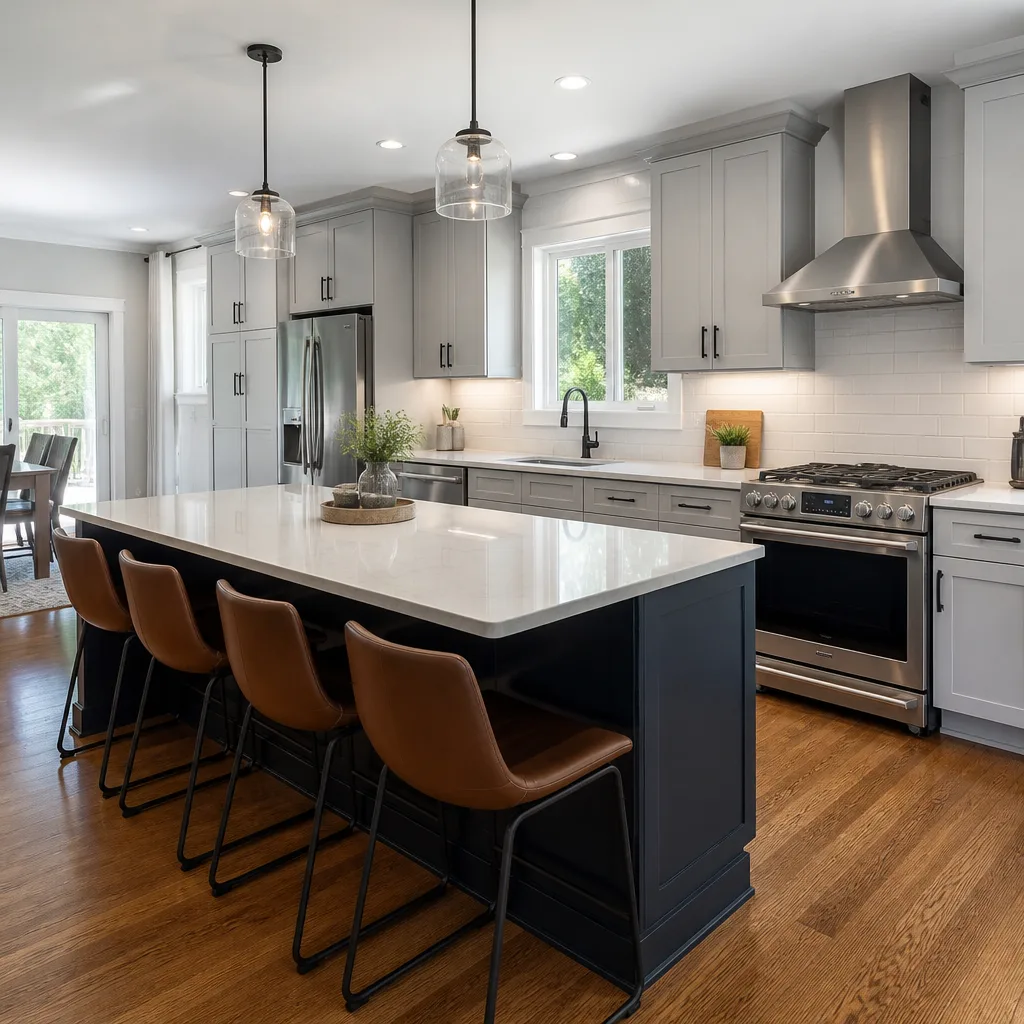 Kitchen remodeling
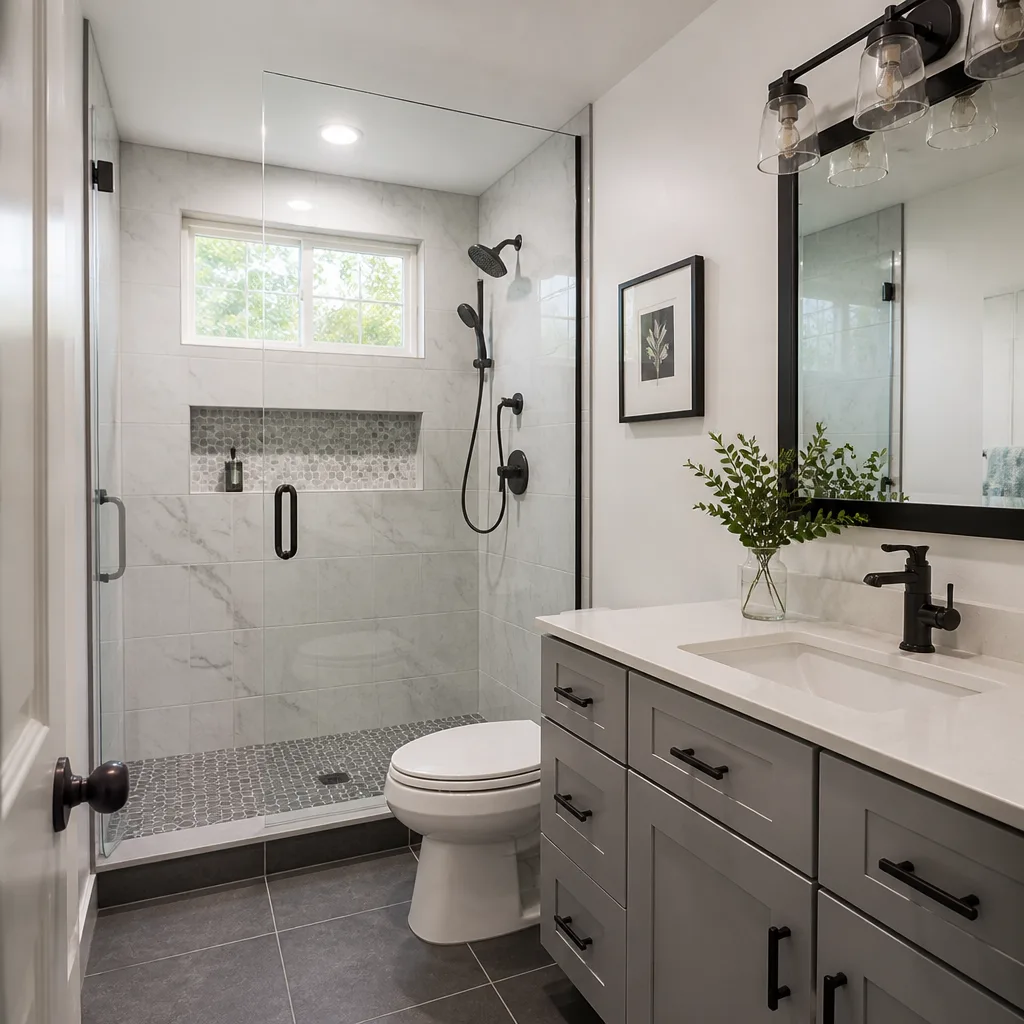 Bathroom remodeling
 Roofing
 Windows & doors
 Driveway & pavers
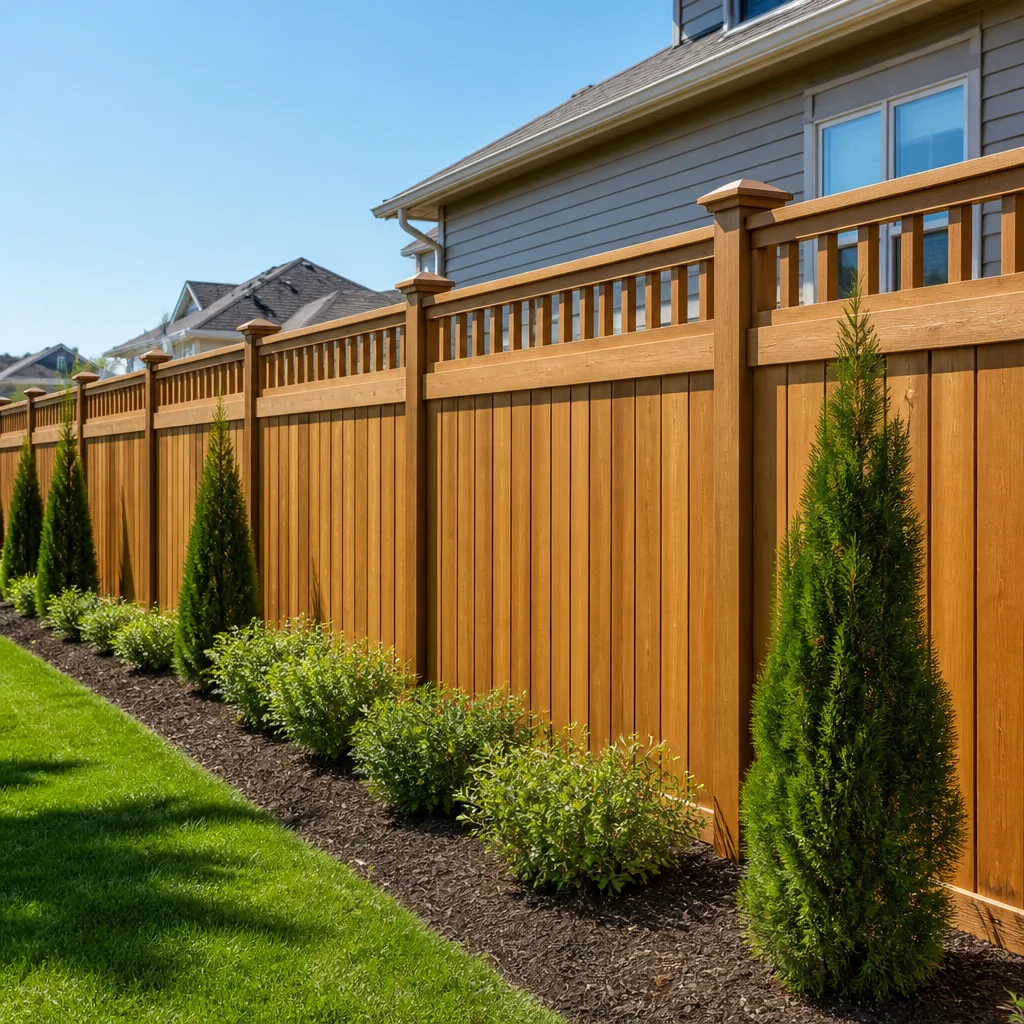 Fence
Free written scope consultation - allowances, timeline, and change-order rules on paper before a single trade is scheduled
Construction Warning Signs: A San Bernardino Homeowner’s Reference Guide
The cracks that matter in a San Bernardino home aren’t always the biggest ones. A 1/16-inch horizontal crack in a block wall means something very different than a 1-inch diagonal crack in drywall, and mixing them up is how homeowners spend money in the wrong place. This guide comes from walking hundreds of Inland Empire homes, not from a textbook. You’ll learn to read your house the way a contractor does: knowing which symptoms are cosmetic, which ones need monitoring, and which ones mean stop using the space and call someone today.
Quick Answer
The construction warning signs that matter most in San Bernardino are subtle: hairline stair-step cracks in stucco, doors that suddenly stick or swing on their own, granule buildup in gutters after a windy week, and a faint burning smell near an old electrical panel. These early signals, tied directly to our expansive clay soils, UV intensity, and 1950s-to-1980s housing stock, predict expensive failures months or years before they become emergencies. Learning to read them correctly, rather than reacting to every crack, saves homeowners thousands in unnecessary repairs.
Styles & brands we work with
Table of Contents
- How to Read Crack Patterns in San Bernardino Homes
- Why San Bernardino’s Expansive Clay Soils Change the Foundation Math
- Roof Warning Signs Specific to Inland Empire Conditions
- Electrical and Plumbing Red Flags in Older San Bernardino Tract Homes
- Warning Signs That Mean Stop Using the Space Immediately
- Signs You Can Schedule Into a Maintenance Window
- What a Homeowner Can Safely Check vs. What Needs a Professional
- A Smarter Way to Think About Home Inspections
How to Read Crack Patterns in San Bernardino Homes
Most homeowners treat every crack as the same problem. That’s the expensive mistake. A competent general contractor in San Bernardino reads cracks the way a doctor reads symptoms: shape, width, direction, and location all tell a different story.
Cosmetic settling cracks are usually hairline, under 1/16-inch wide, and run vertically or diagonally from the corner of a door or window frame. They appear within the first year or two after construction as lumber dries and the structure settles into its final position. These don’t worsen over time unless something else is wrong.
Thermal expansion cracks happen at seams between dissimilar materials: drywall meeting a beam, stucco meeting a window flange, tile meeting a tub deck. In San Bernardino, where summer attic temperatures can exceed 140°F and winter nights drop near freezing, materials expand and contract dramatically. These cracks open and close with the seasons. They’re annoying, but they don’t signal structural failure.
Structural movement cracks are different in kind, not just degree. Watch for:
- Diagonal cracks starting at the corner of a door or window and widening as they travel, typically 1/8-inch or wider at the top
- Stair-step cracks in stucco or block that follow mortar joints in a zigzag pattern
- Horizontal cracks in a block wall or foundation stem wall, especially if one side of the crack is slightly offset from the other
- Cracks that reappear after repair, even after proper patching and repainting
In our experience walking San Bernardino homes, the pattern that gets ignored the most is the stair-step crack on a stucco exterior wall. Homeowners see it as “settling” and paint over it. Two years later, the same crack is back, wider, and now the door on the other side of that wall won’t latch.
Why San Bernardino’s Expansive Clay Soils Change the Foundation Math
Coastal California homes sit mostly on sandy, well-drained soil. San Bernardino doesn’t. Large portions of the city, particularly older neighborhoods north of Baseline and into the foothill communities, sit on expansive clay soils that swell when wet and shrink when dry. This matters more than most homeowners realize.
Expansive soil moves. A lot. Clay can expand by 10 percent or more in volume when saturated, which exerts thousands of pounds of pressure per square foot against a foundation wall or slab. When the soil dries out during our long summers, it shrinks back. That cycle, wet year after dry year, works foundations like a slow-motion jackhammer.
The early symptoms show up before any visible foundation crack appears. Here’s what we tell home remodeling in San Bernardino clients to watch for:
Doors that change behavior seasonally. A door that sticks in February but swings freely in August is probably not a bad hinge. It’s the floor slab or wall framing moving with soil moisture.
Windows that suddenly bind or won’t open. Same principle. If the frame shifts, the window jams. If multiple windows on one side of the house bind at the same time, that side is moving.
Floors that slope or feel springy. A floor that drops 1/2-inch over 10 feet is subtle enough to miss by eye but obvious to a level. A springy floor near an exterior wall can mean the rim joist or sill plate is losing support.
Gaps at the top of interior doors. When a door frame pulls away from the ceiling, leaving a widening gap at one corner, the wall above is moving independently of the wall below.
One specific San Bernardino tell: many homes built in the 1950s through 1970s have concrete slab-on-grade foundations with minimal reinforcement. Those slabs flex more than modern post-tension slabs. The symptom to watch is tile cracking in a straight line across a room, especially if the house sits on a slope or near an area that gets irrigated landscaping runoff.
Roof Warning Signs Specific to Inland Empire Conditions
San Bernardino roofs don’t fail the way coastal roofs do. We don’t get salt air or constant moisture. What we get is brutal: 260-plus sunny days a year, summer roof surface temperatures that can hit 160°F, and Santa Ana wind events that hit 50 to 70 mph several times each fall. That combination accelerates roof aging in specific, predictable ways.
Granule loss from UV exposure. Asphalt shingles shed granules as they age. In San Bernardino, the sun cooks the asphalt binder faster than in cooler climates, so shingles become brittle and begin shedding years earlier. The warning sign is granule buildup in gutters and downspout splash blocks. If you see a tablespoon of granules every few months, that’s normal. If you can see the fiberglass mat through the granules on south-facing and west-facing roof slopes, the shingles are near the end of their life.
Fastener back-out from thermal cycling. San Bernardino’s huge daily temperature swings, sometimes 30 to 40 degrees between day and night, cause roof fasteners to work loose over time. This shows up as shingles that look “lifted” or out of place, especially along eaves and rakes where the roof edge flexes most. A shingle that’s lifted 1/4-inch might not leak yet, but the next strong wind will peel it back.
Ridge cap failures from Santa Ana winds. The ridge cap is the first thing a 60-mph northeast wind attacks. Watch for ridge cap shingles that are cracked, missing, or shifted out of alignment. If neighbors’ homes show ridge damage after a wind event, check yours even if you don’t see a leak. Ridge cap damage lets water in slowly, rotting the ridge board over months before water ever shows on a ceiling.
Flashing problems around penetrations. Plumbing vents, furnace flues, and bathroom fan vents all pierce the roof. The rubber boots around these pipes dry out and crack in our climate, usually within 8 to 12 years. A cracked vent boot leaks directly into the attic, where it can go unnoticed for years before staining a ceiling.
If you’re planning a roof replacement and want materials that hold up to Inland Empire conditions, we install GAF, CertainTeed, and Owens Corning roofing systems. The right shingle for a San Bernardino roof is one rated for high wind and high UV, not just the cheapest option.
Electrical and Plumbing Red Flags in Older San Bernardino Tract Homes
A large share of San Bernardino’s housing stock was built between 1950 and 1985. Those homes were well-built for their era, but their era had different standards. The electrical and plumbing systems in these homes now sit at 40 to 75 years old, and some of the materials used then are known problems today.
Knob-and-tube wiring indicators. Homes built before roughly 1950 sometimes still have knob-and-tube wiring in walls and attics, and surprisingly often it’s still live. The indicators: white ceramic knobs and tubes visible in the attic, cloth-covered wire rather than plastic insulation, and two-prong ungrounded outlets in rooms that were never rewired. Knob-and-tube itself isn’t automatically unsafe if untouched, but it was never designed for modern electrical loads, and most insurance companies now refuse to insure homes with active knob-and-tube.
Galvanized pipe corrosion signals. San Bernardino homes built through the 1970s often have galvanized steel plumbing. Galvanized pipe corrodes from the inside out, and the first signs are subtle: reduced water pressure at fixtures that are farthest from the supply line, rust-colored water after a vacation or period of disuse, and pinhole leaks at threaded joints. By the time a galvanized pipe fails visibly, the entire system is usually near end of life.
Panel warning signs. Federal Pacific Electric panels, common in homes built between 1950 and 1990, have a documented failure rate in which breakers don’t trip when they should. If your panel says “Federal Pacific” or “FPE” on the cover, or if you see “Zinsco” on an older panel, that’s a red flag worth an electrician’s assessment. Warning signs include breakers that feel warm to the touch, a faint burning or fishy smell near the panel, lights that flicker when an appliance kicks on, and breakers that trip repeatedly for no obvious reason.
Polybutylene piping. Some San Bernardino homes built in the 1980s and early 1990s have polybutylene supply lines, usually gray plastic pipe. Polybutylene deteriorates from contact with chlorine in municipal water and can fail catastrophically inside walls. If you see gray plastic water supply lines under a sink or at the water heater, have a plumber identify the material.
A word on scope: if you’re already planning a home renovation in San Bernardino on a 1960s or 1970s home, electrical and plumbing assessment should happen before you open walls, not after. Replacing galvanized supply lines or an old panel is far cheaper and cleaner when done as part of a larger project than as an emergency repair.
Warning Signs That Mean Stop Using the Space Immediately
Some warning signs mean “put this on the list for spring.” Others mean “don’t use this room until a professional has looked at it.” Here’s the difference, based on what we’ve seen matter in San Bernardino homes.
Stop-use: structural. A floor that bounces noticeably when walked on, especially if the bounce has gotten worse in recent months. A ceiling that has sagged enough that you can see a visible curve, particularly if the drywall has cracked in a circular or oval pattern around the sag. Any wall or foundation crack that has widened from hairline to 1/8-inch or more within a single season. If structural movement is active, the space above it is not safe.
Stop-use: electrical. A burning smell near an outlet, panel, or light fixture, even if you can’t see smoke. An outlet or switch faceplate that’s warm to the touch. Sparks or a popping sound when plugging in an appliance. Breakers that trip and immediately re-trip when reset. Any of these means stop using the circuit and call an electrician. Period.
Stop-use: gas. A rotten-egg smell anywhere in the home, since natural gas is odorized with mercaptan specifically so you can smell it. Do not flip switches, do not use a phone inside, do not unplug anything. Evacuate and call the gas company from outside. Gas leaks don’t wait.
Stop-use: water intrusion. Water actively dripping through a light fixture, since water and electricity don’t mix. Water running down an interior wall after rain, which means the wall cavity is filling and the structural framing is being soaked. A ceiling stain that’s growing day over day, indicating an active leak rather than an old one.
The common thread with all stop-use signs: they involve active movement, active current, or active water. They don’t get better on their own, and waiting months makes the eventual repair larger and more expensive.
Signs You Can Schedule Into a Maintenance Window
Not every warning sign needs immediate action. In fact, a big part of being a smart San Bernardino homeowner is knowing what to monitor versus what to react to. Monitored properly, these issues can wait until they’re convenient to address, or until they’re bundled into a larger project.
Hairline drywall cracks. Under 1/16-inch wide, not growing, not associated with door or window alignment problems. Mark the end of the crack with a pencil date. Check it monthly for three months. No growth, no action needed.
Minor stucco cracking. Hairline cracks on a wall that hasn’t shifted. These can be patched as part of a future exterior painting project.
Slow-draining fixtures. A sink or tub that drains slowly but reliably. That’s usually a partial clog building in the trap or drain line. It can wait until a plumber is already on-site for something else.
Faded or worn exterior paint. Paint is a maintenance item, not an emergency. Faded paint on the south and west sides of a San Bernardino home is UV damage. The underlying stucco or siding is usually fine if the paint hasn’t cracked or peeled.
Loose door handles, cabinet hinges, and hardware. Annoying, not urgent. These are 10-minute fixes that can happen during any maintenance visit.
Minor roof granule loss. Some granule loss is normal as shingles age. The line between “normal” and “time to replace” is when you can see bare fiberglass mat or when granule buildup in gutters becomes heavy enough to measure in cups rather than tablespoons.
The smart approach we recommend to Toolbox Contractors home maintenance clients is a simple notebook or phone note. When you notice something, write it down with a date. Three months later, check it again. Most warning signs in San Bernardino homes announce themselves early if you’re paying attention.
What a Homeowner Can Safely Check vs. What Needs a Professional
A homeowner can and should monitor their own home. Here’s a practical monthly and seasonal checklist that doesn’t require climbing on a roof or touching an electrical panel.
Monthly, or after any significant weather event:
- Walk the interior and test every door and window for sticking or binding that wasn’t there before.
- Check ceilings for new water stains, especially under bathrooms and around chimneys.
- Look at exterior walls for new cracks, especially stair-step patterns in stucco.
- Run each faucet and note any change in water pressure or odor.
- Sniff near the electrical panel and any outlets for burning smells.
- After wind events, check the ground around the home for shingle pieces or granules in gutters.
Leave these to professionals:
- Climbing onto any roof with a pitch steeper than 3:12, or any roof at all if you don’t have proper fall protection. Roof falls kill more homeowners every year than any other DIY accident.
- Opening an electrical panel to inspect breakers. Even with the main breaker off, the line side of the main is still live.
- Moving or cutting any wire, pipe, or duct inside a wall cavity. You don’t know what’s behind the drywall until you’ve seen it.
- Any work involving gas lines or gas appliances. Gas work in California requires a permit and a licensed contractor.
- Structural evaluation of foundation cracks, floor slope, or wall movement. This requires tools and training, not just observation.
When it comes to materials and scope, know your limits. We work with James Hardie siding, KraftMaid cabinetry, and similar brands specifically because their installation requirements are precise. A James Hardie installation done wrong voids the warranty and shortens the product life. The same is true for most modern building materials. If you’re not certain, the smart move is a professional assessment.
A Smarter Way to Think About Home Inspections
Standard home inspections are useful but limited. A typical inspection report runs 40 to 60 pages, covers everything from a loose outlet cover to a potential foundation issue, and gives each item a severity rating. The problem: most homeowners read the report once, file it, and never create a plan from it.
Here’s a better approach we’ve developed from walking hundreds of San Bernardino homes:
Treat the inspection report as a prioritized work list, not a historical document.
- Pull out every item rated “safety hazard” or “major defect.” Those go to the top of the list.
- Separate items into “monitor” and “act now.” A hairline crack is monitor. A warm breaker is act now.
- Bundle the “act now” items into a single project scope where possible. Many San Bernardino homes need a combination of roof, electrical, and plumbing work. Doing these together costs less than doing them separately because mobilization, permitting, and project management are shared.
- Re-inspect monitor items quarterly. If anything changes, it moves to the action list.
- Schedule a professional walk-through every two to three years, even if nothing seems wrong. The point is to catch what you’re not trained to see.
This approach saves money because it catches problems when they’re small, and it respects the reality of homeownership: budgets are finite, and you can’t fix everything at once. What you can do is know the difference between what’s urgent and what’s not, and act accordingly.
Common Mistakes to Avoid
- Caulking over a structural crack. Caulk hides the symptom without addressing the movement. The crack returns, wider, and now you’ve spent money twice.
- Ignoring door behavior changes. A door that sticks isn’t a hardware problem if the floor is moving under it. Replacing the hinge or planing the door only works if the frame stays put.
- Painting over water stains without finding the source. The stain comes back in weeks if the leak is active. Always find the water source before you repaint.
- Assuming a new roof means no roof problems. Even new roofs can fail at flashing points if installed incorrectly. The shingles might be fine while the flashing leaks.
- Waiting until spring to check roof and gutter damage from Santa Ana season. Wind damage that happens in October doesn’t wait until April. Check after each major wind event.
- Treating all foundation movement as catastrophic. Some movement is normal in San Bernardino’s expansive soils. The key is knowing whether the movement is seasonal and stable, or progressive and worsening.
- Assuming an older home’s electrical system is “grandfathered” and fine. Grandfathered means the code didn’t require replacement. It doesn’t mean the system is safe for how you live now: EVs, air conditioning, home offices, and multiple appliances.
See the difference
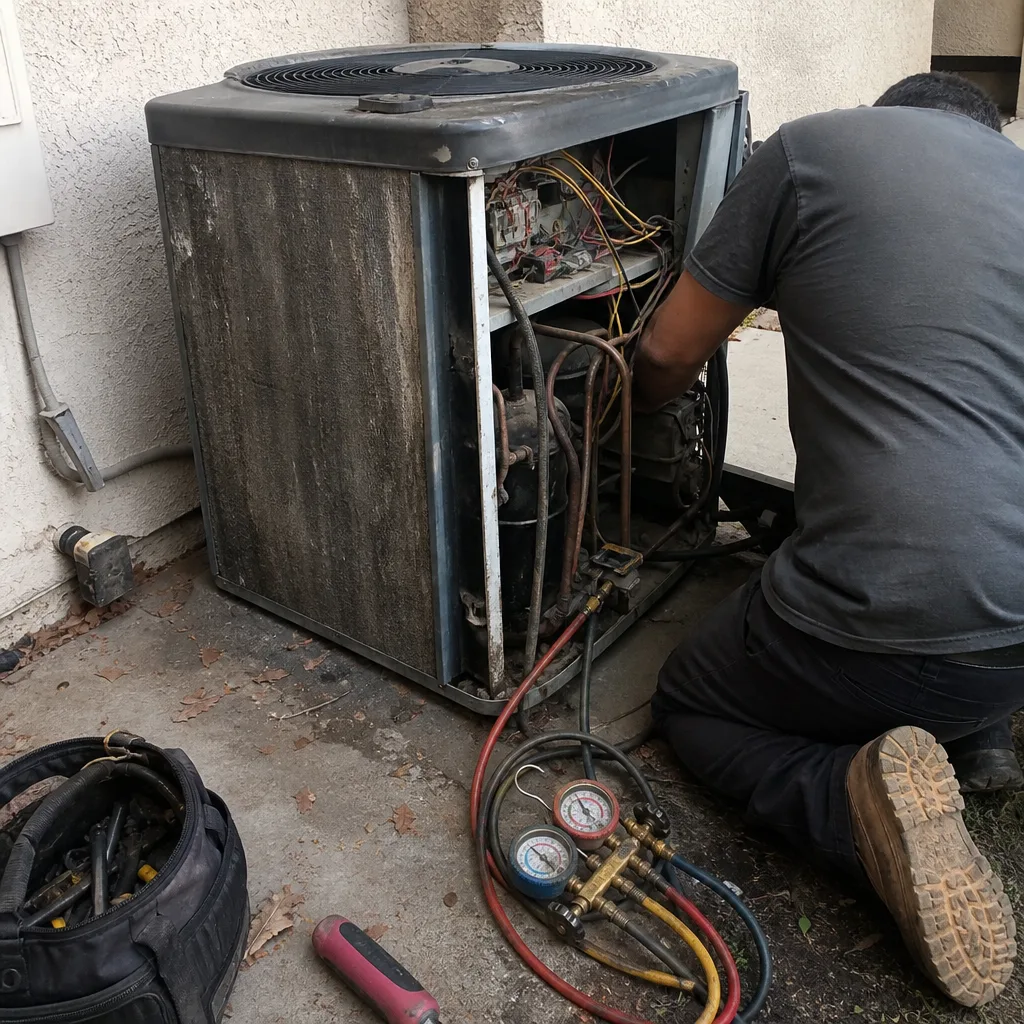 Before
 After
 Before
 After
 Before
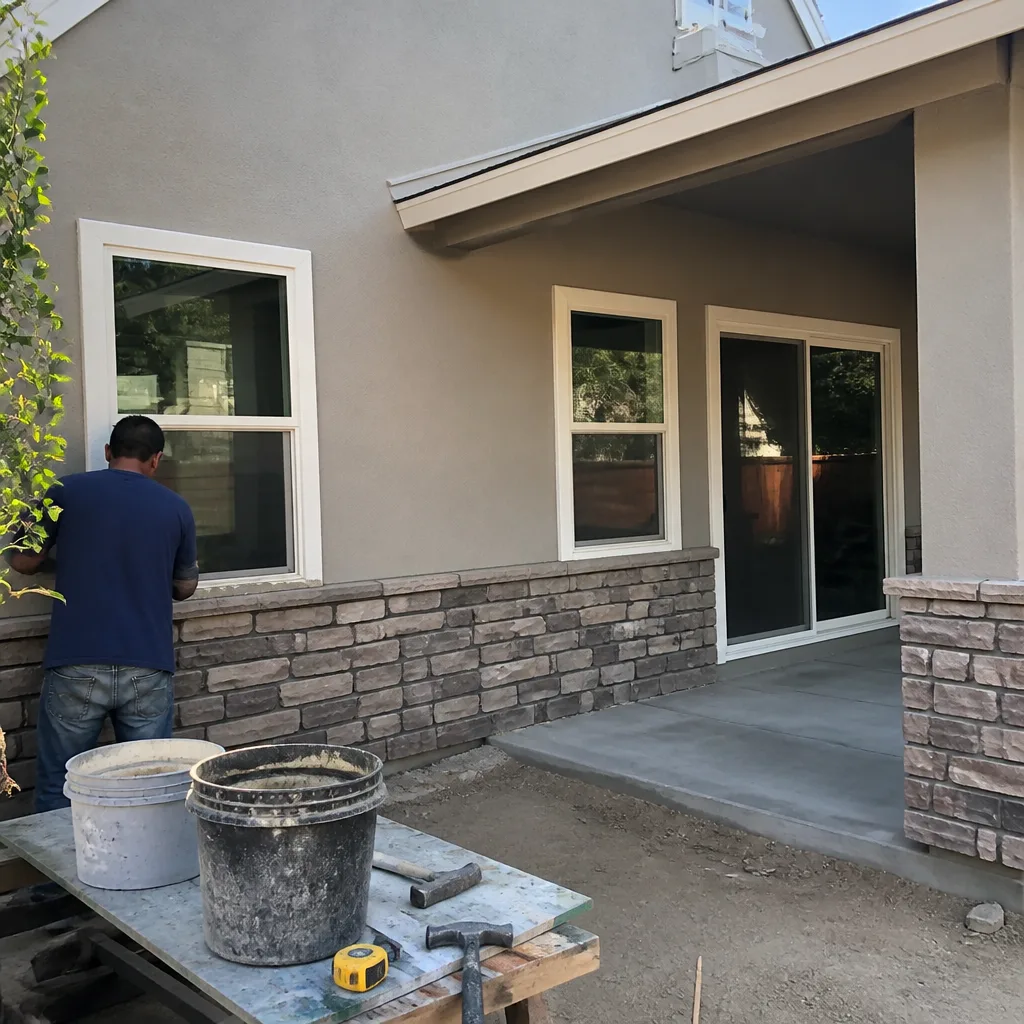 After
When to Call a Professional
Call a professional when the warning sign involves active water, active electricity, active gas, or movement you can see changing week over week. Also call when you’ve identified multiple warning signs that need to be addressed together, since a single point of accountability saves coordination headaches. If you’re in San Bernardino and want a prioritized walk-through of what you’re seeing, Toolbox Contractors offers free estimates. Call (855) 382-3257 and describe what you’ve noticed. We’ll tell you honestly what needs attention now, what can wait, and what it will cost.
Frequently Asked Questions
How much does a foundation inspection cost in San Bernardino?
A structural engineer’s foundation inspection in San Bernardino typically runs $300 to $600 depending on the size of the home and whether written documentation is required. Most homeowners don’t need a full engineering report to start; a qualified general contractor can often identify whether a crack is structural or cosmetic during a free walk-through, and recommend an engineer only if warranted.
What is the most common construction defect in San Bernardino homes?
The most common defect we see in San Bernardino homes is water intrusion at roof flashing points, particularly around chimneys, vents, and parapet walls on older homes. These leaks are slow, often unnoticed for years, and cause more cumulative structural damage than dramatic failures like a storm-blown roof.
How do I know if a crack in my San Bernardino home is structural?
A structural crack is typically wider than 1/8-inch, follows a diagonal or stair-step pattern, and is associated with other symptoms like a sticking door, a window that binds, or a floor that slopes. Cosmetic cracks are hairline, stable, and isolated to surface materials like drywall or stucco without underlying movement.
Are older San Bernardino homes more likely to have construction problems than newer ones?
Not necessarily. Older homes have age-related issues: galvanized plumbing, outdated electrical panels, and roof systems at end of life. Newer homes have different issues: construction defect claims, settling cracks, and sometimes rushed workmanship during building booms. The difference is that older homes usually show their problems gradually, while newer homes can hide construction defects that emerge all at once.
How often should a San Bernardino homeowner have their roof inspected?
Every two to three years for a roof under 10 years old, and annually once the roof passes 10 years. After any Santa Ana wind event with gusts over 50 mph, check for visible damage even if the roof is new. Wind damage doesn’t wait for the scheduled inspection.
Can one contractor really handle foundation, roof, electrical, and interior work?
A licensed general contractor can absolutely coordinate all of those scopes under one contract, which is how we work at Toolbox Contractors. The homeowner gets one point of accountability, one schedule, and one warranty conversation. It beats managing four separate specialists who each blame the other when something goes wrong. Call (855) 382-3257 to talk through your scope.
The Bottom Line
San Bernardino homes talk to their owners. The trick is knowing the language. Expansive clay soils move foundations in predictable ways. UV and wind age roofs in specific patterns. Older tract homes have electrical and plumbing systems with known failure modes. Learning to read these signals, monitoring what’s minor, and acting fast on what’s serious, is the difference between a $500 repair and a $50,000 one. Watch your doors, your cracks, your gutters, and your panel. When something changes, write it down. When it changes again, call someone who’s walked enough San Bernardino homes to know what they’re looking at.
Written by the team at Toolbox Contractors, serving San Bernardino since 2013.